
If you’re planning to be away from home for a month—whether for a long vacation, a work assignment, study abroad, or visiting family—figuring out your mobile connectivity is probably one of those logistics you’d rather not think about. But getting it wrong can mean paying outrageous roaming fees, running out of data at the worst possible moment, or spending precious hours of your trip hunting down a SIM card in an unfamiliar place. The good news is that 30-day SIM options have never been more abundant, affordable, or easy to get. The challenge is sorting through the choices: physical SIM or eSIM, local carrier or global provider, data-only or full talk and text. In this guide, I’ll walk you through exactly how to pick the right month-long SIM card for your specific situation, so you can land, connect, and focus on enjoying your time away.
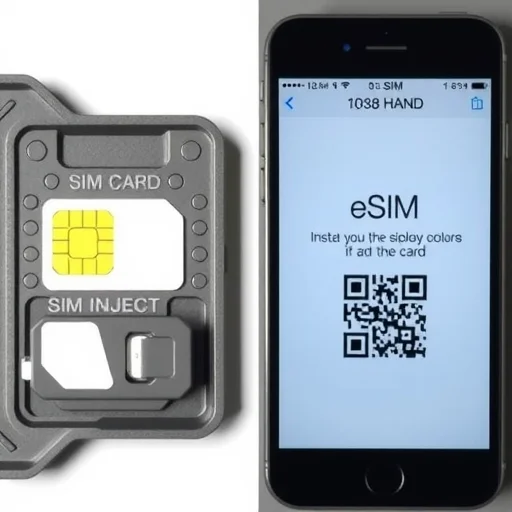
Let’s start with the most fundamental choice: physical SIM card versus eSIM. A physical SIM is the traditional plastic card you insert into your phone’s SIM tray. It’s familiar, universally compatible with any unlocked phone, and can be swapped instantly between devices. An eSIM is a digital SIM embedded in your phone—you download a carrier profile instead of inserting a card. If your phone was made in the last few years (iPhone XS or newer, Google Pixel 3 or newer, recent Samsung Galaxy models), it likely supports eSIM. The advantage for a month-long trip is that you can buy and install an eSIM before you leave home. The moment you land, you’re connected. No searching for a shop, no waiting in line, no fiddling with a paperclip to open the SIM tray. If your phone doesn’t support eSIM, or if you simply prefer the simplicity of a physical card you can hold and move between devices, physical SIMs remain an excellent and widely available option.
Once you’ve decided on the format, the next major decision is whether to go with a local carrier or a global provider. Local carriers are the mobile networks that operate in your destination—think EE or O2 in the UK, Vodafone in Germany, Telstra in Australia, or Verizon in the US. Buying a SIM directly from a local carrier gives you a real local phone number, access to that carrier’s full network (often including 5G), and the best possible speeds because you’re connecting directly rather than through a middleman. For a month-long stay, especially if you need to make local calls, receive SMS verification codes, or if you’ll be in areas with limited coverage, this is often the most reliable option. The trade-off is that you usually have to visit a store or kiosk, show identification like your passport, and navigate a plan structure that may be designed for residents rather than short-term visitors.
Global providers are companies like Airalo, Holafly, Nomad, and Maya Mobile that specialize in selling SIMs and eSIMs to travelers. They lease access from local carriers worldwide and package it into simple, app-based plans. The massive advantage is convenience: you can buy a 30-day plan entirely from your phone, often for less than what a local carrier charges for a comparable bundle. Most global provider plans are data-only—you won’t get a local phone number for traditional calls and SMS—but for many travelers who rely on WhatsApp, iMessage, FaceTime, and other app-based communication, that’s perfectly fine. The potential downside is that your data may be deprioritized on the local network, meaning during busy times you might experience slower speeds than someone using a direct local carrier SIM.
Now let’s talk about data. For a 30-day trip, estimating how much data you’ll need is one of the hardest parts. Underestimate, and you’ll be scrambling to top up in the middle of your trip. Overestimate, and you’re paying for gigabytes you never use. Here’s a practical framework based on real-world usage. Light users—those who mostly use maps for navigation, messaging apps like WhatsApp or iMessage, and occasional social media browsing—typically consume 500MB to 1GB per day. Moderate users—adding music streaming, regular social media with photos, and occasional video calls—use 1GB to 2GB per day. Heavy users—streaming video (Netflix, YouTube), frequent video calls, large file uploads, or using their phone as a hotspot for a laptop—need 3GB or more daily. For a 30-day trip, that translates to roughly 15GB for light use, 30GB to 60GB for moderate use, and 90GB or more for heavy use. Many 30-day plans offer bundles in these ranges, so start by honestly assessing your habits.
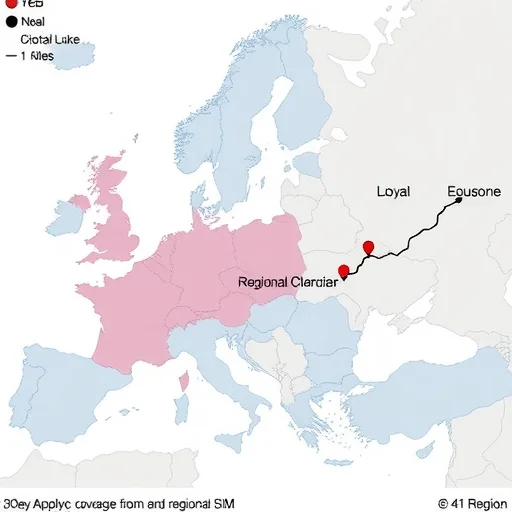
Coverage is another critical factor that people often overlook until they’re standing in a remote area with no signal. If you’re spending your entire month in a single major city, coverage from any reputable provider will likely be excellent. But if your itinerary includes rural areas, national parks, or multiple countries, the underlying network matters immensely. Before buying, check the provider’s coverage map for your specific destinations. For local carriers, this information is usually detailed on their website. For global providers, they typically list which local carriers they use in each country. If you’re traveling across borders—say, a month in Europe visiting six countries—a regional plan that works across multiple destinations is far more convenient than buying a separate SIM for each country.
Let’s walk through a few real scenarios to help you decide. Maria is spending a month in Italy, splitting time between Rome, Florence, and the Amalfi Coast. She needs to make local calls to restaurants and tour operators, and she wants to receive SMS from her Italian rental agency. She buys a physical SIM from a local carrier like TIM or Vodafone at a shop near her first hotel. She shows her passport, spends about 15 minutes setting up, and walks out with an Italian phone number and a 30-day plan that includes generous data, local calls, and texts. The local number makes her trip smoother, and the in-store setup ensures she’s connected immediately.
Now consider David, a digital nomad spending a month working remotely from Thailand. He’ll be in Chiang Mai for three weeks and doing a week of island hopping. He needs reliable data for video calls, file transfers, and using his phone as a hotspot for his laptop. He also needs a local number to coordinate with co-working spaces and local services. He buys a local carrier eSIM from AIS, Thailand’s largest network, which he activates online before he leaves. He gets a Thai number, 60GB of full-speed 5G data for 30 days, and priority network access. The cost is around $40, and he never has to visit a store.
Then there’s Sarah, who’s backpacking across Southeast Asia for a month—Thailand, Vietnam, Cambodia, and Laos. She moves every few days, stays in hostels, and uses her phone primarily for maps, hostel bookings, and WhatsApp. She doesn’t need a local phone number. She buys a regional eSIM from a global provider before she leaves home. The single plan covers all four countries, and she never has to stop at a mobile shop or swap SIMs at borders. Total cost for the month is around $35 for 20GB of data, which lasts her the entire trip because she uses hostel Wi-Fi in the evenings.
One often-overlooked consideration is what happens after the 30 days. Some plans expire completely, meaning you lose any unused data. Others allow you to top up or renew for an additional period. If there’s any chance your trip might extend, or if you plan to return to the same country in the future and want to keep the same number, look for a provider that offers easy renewal options. Many local carriers allow you to recharge prepaid plans online or through an app, while some global providers let you purchase additional data packs that extend validity.
Another practical point: always verify that your phone is unlocked before buying any SIM card. If you purchased your phone through a carrier with a contract, it may be locked to that carrier’s network. A locked phone will only work with SIM cards from that specific carrier. Before you travel, contact your carrier to confirm your phone is unlocked, or request an unlock if you’re eligible. There’s nothing more frustrating than arriving at your destination, buying a SIM card, and discovering it won’t work in your phone.
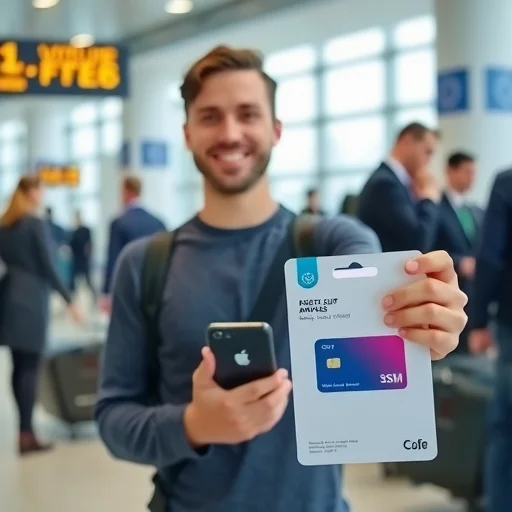
Finally, consider whether you need a physical SIM card or eSIM if you plan to keep your home SIM active. Many modern phones support dual SIM functionality—either two physical SIMs, one physical plus one eSIM, or two eSIMs. This allows you to keep your home number active for calls and texts while using a local SIM for data. For a month-long trip, this is often the ideal setup. You stay reachable on your regular number, you avoid roaming charges for data, and you can switch between lines as needed. Just be aware that some home carriers charge for receiving calls or texts while roaming, so check your plan details before you go.
Ultimately, choosing the right month-long SIM card comes down to answering three questions honestly: Where exactly are you going? How much data do you actually use on a typical day? And do you need a local phone number for calls and SMS? Once you have those answers, the decision becomes straightforward. For single-country stays where a local number is useful, a local carrier SIM or eSIM gives you the most complete service. For multi-country trips or short-term stays where data is your only need, a global provider eSIM offers unbeatable convenience. And if your phone doesn’t support eSIM, physical SIMs from either category are still widely available and just as effective. With a bit of planning before you leave, staying connected for a month doesn’t have to be complicated, expensive, or time-consuming. For a month-long trip, choose between local carrier SIMs (best for a local phone number and priority network access) and global provider eSIMs (ideal for multi-country travel and app-based convenience). Estimate your daily data needs honestly, verify coverage for your specific destinations, and confirm your phone is unlocked before purchasing. Dual SIM setups let you keep your home number active while using local data.
#30DaySIMCardFINISHED
Staying Connected for a Month? Here’s How to Choose the Right 30-Day SIM Card
If you're planning to be away from home for a month—whether for a long vacation, a work assignment, study abroad, or visiting family—figuring out your mobile connectivity is probably one of those logi

Global provider eSIM saved my multi-country trip across Southeast Asia. 30 days, 20GB, covered 4 countries. Never had to think about it. If you’re moving around a lot, this is the way to go.
I’ve done both and for a month-long stay, local carrier SIM is my go-to. The local number made everything easier—restaurant reservations, local services, even signing up for the gym. Worth the 20 minutes at the store.
One thing I learned the hard way: check if your phone is carrier locked before you leave! Bought a local SIM in Japan and it didn’t work because my phone was still locked to my US carrier. Had to use Wi-Fi for the whole first week until I sorted it out. Don’t be me.
The data usage guide is spot on. I thought I’d need 50GB for a month, bought a huge plan, ended up using less than 20GB because I was on Wi-Fi at my Airbnb most nights. Start with a moderate plan, you can always top up if needed.
I used the dual SIM approach for a month in Canada: kept my US physical SIM for calls and texts, added a Canadian eSIM for data. Worked perfectly. Never had to worry about roaming charges and still got all my regular calls.