
15GB of eSIM Data – Is It Enough for Your Trip? Here’s How to Know
If you’re shopping for an eSIM and you keep seeing 15GB plans, you’ve probably wondered: is that actually enough? It’s one of the most common data bundles offered by global eSIM providers—often priced attractively, valid for 15 to 30 days, and marketed as the “sweet spot” for travelers. But the answer to whether it’s enough for your trip isn’t simple. It depends entirely on how you use your phone, where you’re going, and whether you’ll have regular access to Wi-Fi. In this guide, I’ll break down exactly what 15GB of data looks like in real-world usage, walk you through different travel scenarios, and help you decide if a 15GB eSIM is your perfect match or if you should size up or down.
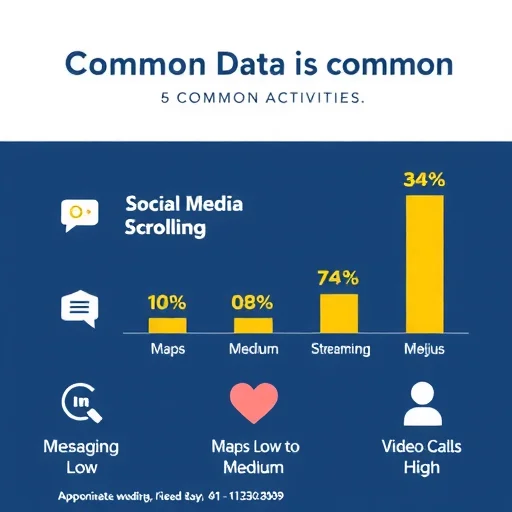
First, let’s put 15GB into perspective. Data is measured in gigabytes, and 15GB equals 15,000 megabytes. To understand what that means for your trip, it helps to know how much data common activities consume. Sending and receiving messages on WhatsApp or iMessage uses very little—roughly 5 to 10MB per day for typical use, even with photos. Scrolling through Instagram or TikTok is heavier: a minute of TikTok can use 10 to 20MB, while scrolling through Instagram stories and photos might use 100 to 200MB per hour. Maps and navigation, a staple for travelers, uses about 10 to 20MB per hour of active use. Streaming music on Spotify or Apple Music uses about 40 to 80MB per hour. Video streaming is the biggest consumer: Netflix or YouTube in standard definition uses about 250MB to 500MB per hour, while high definition can use 1GB to 3GB per hour. Video calls on Zoom or FaceTime use around 500MB to 1GB per hour.

Now let’s translate that into daily usage for a traveler. A light user—someone who uses maps for a couple of hours, sends messages throughout the day, checks social media briefly, and streams music for an hour—might use 500MB to 800MB per day. At that rate, 15GB would last roughly 18 to 30 days. A moderate user—adding an hour of video streaming in standard definition, more active social media use, and occasional video calls—might use 1GB to 1.5GB per day. For that user, 15GB would last 10 to 15 days. A heavy user—streaming HD video daily, multiple video calls, downloading files, using the phone as a hotspot—could easily burn through 2GB to 4GB per day, meaning 15GB might last less than a week.
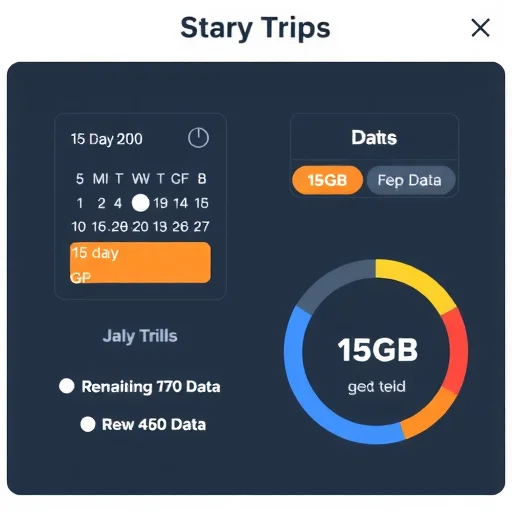
So the first question to ask yourself is: how long is your trip? A 15GB eSIM is often packaged with a validity period that matches its data allowance—common options are 15GB for 15 days, 15GB for 30 days, or 15GB with no expiration but a set usage period. If your trip is 7 to 10 days and you’re a moderate user, 15GB is probably plenty. If your trip is 30 days and you’re a heavy user, you’ll likely run out before the end.
The second factor is Wi-Fi availability. This is the variable that most people underestimate. If you’re staying in hotels, Airbnbs, or co-working spaces with reliable Wi-Fi, you can offload most of your heavy data usage—video streaming, large downloads, software updates—to those connections. Your eSIM data then becomes purely for times when you’re out and about: navigation, messaging, quick social media checks, and the occasional call. In this scenario, even a moderate traveler might only use 300MB to 500MB per day, making 15GB last 30 days or more. Conversely, if you’re camping, road-tripping, or staying in places with unreliable Wi-Fi, your eSIM will be your primary connection, and 15GB will go much faster.
Let’s walk through a few real scenarios to help you decide. Emma is going on a two-week trip to Japan. She’s staying in hotels with Wi-Fi, so she’ll stream Netflix and do large uploads in the evenings. During the day, she’ll use maps to navigate cities, send messages, take photos for social media, and occasionally scroll through Instagram. She estimates her daily eSIM data usage at around 800MB. A 15GB eSIM would give her about 18 days of coverage—plenty for her 14-day trip, with a little buffer. She chooses a 15GB/30-day plan and feels confident she won’t run out.
Now consider David, a digital nomad spending a month in Bali. He’s staying in a villa with unreliable Wi-Fi, so he uses his phone as a hotspot for his laptop for several hours each day. He’s on video calls for work, streams music throughout the day, and uses maps when exploring. His daily usage averages 2.5GB. For him, a 15GB eSIM would last less than a week. Instead, he opts for a 50GB or unlimited plan that covers his full month, or he buys a local carrier SIM with a generous data allowance that’s better suited to heavy usage.
Then there’s Sarah, who’s backpacking across Europe for 10 days, visiting three countries. She stays in hostels with Wi-Fi, but she’s out exploring most of the day. She uses maps heavily, sends messages and photos to friends, and occasionally streams music. She’s not watching videos or doing video calls. Her daily usage is around 600MB. A 15GB eSIM would give her more than enough data for her 10-day trip, and the regional plan covers all three countries without any additional purchases. For her, 15GB is the perfect sweet spot—affordable, sufficient, and hassle-free.
One important thing to understand about 15GB eSIMs is how they handle data once you hit the limit. Different providers have different policies. Some cut off data entirely once you exceed your allowance, requiring you to purchase a top-up. Others reduce speeds to a very slow rate—often 128kbps or 256kbps—which is enough for messaging and email but not for maps, social media, or streaming. Before buying, check the provider’s policy on data exhaustion. If you’re close to the edge of your usage estimate, it’s worth knowing whether you’ll have a grace period of slow data or whether you’ll need to top up immediately.
Another factor is whether your phone and the eSIM support 5G. Many 15GB eSIM plans offer 4G/LTE speeds, which are perfectly adequate for most travel needs. But if you have a 5G-capable phone and you’re traveling in areas with strong 5G coverage, a plan that includes 5G access can make a noticeable difference for video calls, large file transfers, and streaming. Check the plan details—some 15GB eSIMs include 5G where available, while others are capped at 4G speeds.
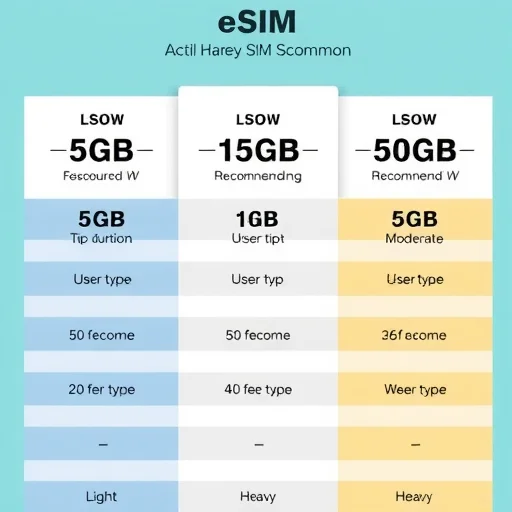
Let’s talk about cost. A 15GB eSIM typically falls into the “mid-tier” pricing category. Depending on the region and provider, you might pay anywhere from $15 to $40 for 15GB valid for 15 to 30 days. Compare this to daily roaming fees from your home carrier, which could cost $10 per day or more, and the savings are obvious. The question isn’t whether 15GB is cheaper than roaming—it almost always is—but whether it’s the right size for your needs compared to other eSIM options. A 5GB plan might be significantly cheaper but insufficient for a longer trip. A 50GB plan might be overkill and more expensive. For many travelers, 15GB hits the balance of enough data for a week or two without paying for gigabytes they won’t use.
One often-overlooked strategy is combining a 15GB eSIM with offline tools. Download offline maps for your destinations before you travel—Google Maps allows you to download entire cities or regions for offline use, which cuts map data consumption significantly. Download music playlists on Spotify or Apple Music so you’re not streaming on the go. Pre-download Netflix shows or YouTube videos on Wi-Fi. These simple habits can stretch a 15GB plan far beyond its apparent capacity, turning it into enough data for a much longer trip than the raw numbers suggest.
Finally, consider your backup options. If you choose a 15GB eSIM and find yourself running low, most providers make it easy to top up with additional data. Some allow you to purchase a top-up pack that adds more data to your existing eSIM; others require you to buy a new eSIM. Before your trip, check the top-up process for your chosen provider. Knowing that you can add 5GB or 10GB with a few taps in an app gives you the confidence to start with a 15GB plan, knowing you’re not locked in if your usage turns out to be higher than expected.
Ultimately, whether 15GB is enough comes down to your travel style, destination, and habits. If you have regular Wi-Fi access, stick to moderate usage like maps and messaging, and your trip is two weeks or less, 15GB is likely more than enough. If you’re a heavy user, traveling for a month with limited Wi-Fi, or relying on your phone for work, you’ll probably want a larger plan. The best approach is to honestly estimate your daily usage, factor in Wi-Fi availability, and choose a plan that gives you a comfortable buffer without paying for excessive unused data. With a little planning, a 15GB eSIM can be the perfect travel companion. A 15GB eSIM typically lasts 10 to 30 days depending on your usage habits and Wi-Fi availability. Light to moderate users with regular Wi-Fi access can easily stretch 15GB through a two-week trip, while heavy users or those without reliable Wi-Fi may need a larger plan. Offline maps and pre-downloaded content help maximize your data allowance.
15GB was perfect for my 12-day trip to Italy. Used maps every day, lots of Instagram, and even some FaceTime calls. Still had 2GB left at the end. Definitely enough if you use Wi-Fi at hotels.
Check the fine print on speed after you use up your data. My 15GB eSIM dropped to 128kbps when I hit the limit, which was actually fine for messaging and basic maps. Saved me from having to buy a top-up for the last two days.
One tip: download offline maps before you go. I used Google Maps offline for most of my trip and my 15GB eSIM lasted twice as long. Small habit, big difference.
I made the mistake of getting 15GB for a 3-week work trip with no reliable Wi-Fi. Ran out in 10 days. Lesson learned: if you’re working remotely or streaming a lot, go bigger.
I love that 15GB plans are usually the best value per GB. The 5GB plans are often overpriced per GB, and the 50GB plans are more than I need. 15GB is the sweet spot for most of my 10-14 day trips.