
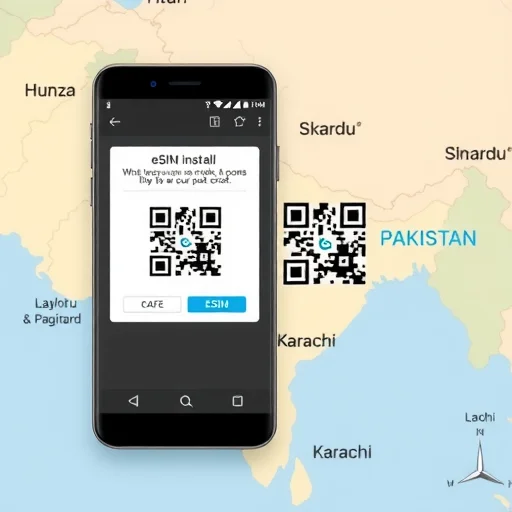
Traveling to Pakistan? Here’s How to Choose the Best eSIM for Reliable Coverage
If you’re planning a trip to Pakistan—whether it’s exploring the bustling streets of Lahore, trekking in the majestic mountains of Hunza, or navigating the vibrant city of Karachi—staying connected is essential. You’ll want reliable data for ride‑hailing apps like Careem, navigating through historic cities, and staying in touch with hosts who often communicate via WhatsApp. The best solution for most travelers is an eSIM: a digital SIM you can install before you depart. But connectivity in Pakistan varies significantly between urban centers and the stunning but remote northern areas. This guide breaks down how to choose the right eSIM for your Pakistani adventure.
Pakistan has a well‑developed mobile network landscape with four main operators: Jazz, Zong, Telenor, and Ufone. Jazz (formerly Mobilink) has the most extensive overall coverage, particularly in rural areas and the northern regions that attract many travelers—think Hunza, Skardu, and the valleys of Khyber Pakhtunkhwa. Zong is the first and largest 4G provider in the country, offering excellent speeds in cities and a growing rural footprint. Telenor and Ufone are also solid options but tend to have slightly more limited coverage in remote northern areas. When choosing an eSIM, understanding which local carrier the provider uses is crucial. For travelers venturing beyond the major cities—and in Pakistan, that’s often the whole point—prioritizing Jazz or Zong’s network is usually the safest bet for consistent coverage.

The key to picking the best eSIM for Pakistan comes down to three factors: the underlying local network, the plan structure, and your itinerary. If your trip is focused on cities like Islamabad, Lahore, and Karachi, any of the four networks will serve you well. But if you’re planning to drive the Karakoram Highway, visit the fairy‑tale valleys of Hunza and Swat, or trek in the mountains around Skardu, choosing an eSIM that runs on Jazz’s network will give you the widest coverage in remote areas. Zong is also a strong contender, especially in the north where it has invested heavily in infrastructure. Some international eSIM providers offer “multi‑network” roaming that automatically selects the strongest available signal—a great option for travelers covering diverse regions.
Next, consider how you’ll use data. Pakistan is a country where you’ll likely be using navigation extensively—often in mountainous terrain with limited Wi‑Fi. You’ll also be using WhatsApp constantly (it’s the primary communication tool in Pakistan), checking weather conditions for mountain passes, and possibly sharing your journey in real time. eSIM plans for Pakistan generally fall into fixed‑total categories: you get a set amount of data (5GB, 10GB, 20GB, or more) valid for a specific period like 7, 15, or 30 days. Daily‑cap plans are available from some global providers but are less common than fixed totals. Unlimited high‑speed plans exist but can be relatively expensive. For most travelers, a fixed‑total plan is the most straightforward: estimate your usage based on trip length and activities. If you’re relying heavily on GPS, WhatsApp calls, and streaming, budget on the higher side.
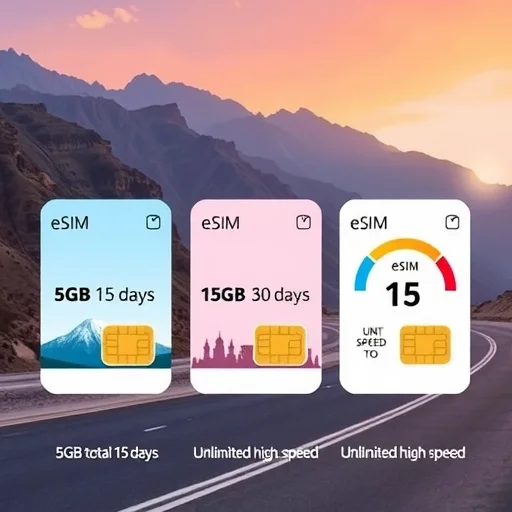
So which specific eSIM should you consider? For short trips (3 to 5 days) focused on a single city like Lahore or Islamabad, a compact 3GB or 5GB fixed‑data eSIM from a reputable global provider like Airalo, Nomad, or Holafly is usually sufficient. You’ll use data for maps, ride‑hailing, and social media. For week‑long stays (7 to 10 days) that include multiple destinations—say, Islamabad, Peshawar, and the Swat Valley—10GB is a comfortable sweet spot. For extended road trips (two weeks or more) covering the northern areas, especially if you’re working remotely or staying in guesthouses where Wi‑Fi is limited, consider 15GB or 20GB. Some travelers also purchase a direct local prepaid SIM upon arrival—Jazz and Zong both offer tourist SIMs at airports in Islamabad, Lahore, and Karachi, which can provide excellent value and often include a local phone number. Note that local SIM registration requires a passport and sometimes a biometric check, which is why an international eSIM can be much more convenient for short‑term travelers.
One detail that catches many travelers off guard: Pakistan’s mobile coverage, while improving rapidly, still has gaps in the most remote mountain valleys and along certain stretches of the Karakoram Highway. Even Jazz, the best for rural areas, will lose signal in the deepest valleys of Hunza or on some high‑altitude passes. Downloading offline maps before heading into these areas is essential. Apps like Google Maps (with offline areas saved) and Maps.me are indispensable. Having an eSIM with Jazz gives you the best chance of picking up signal when you’re near a town or on a main road, but it’s not a guarantee in the most remote regions.
Another practical consideration: Pakistan is a country where WhatsApp is the primary means of communication. You’ll use it to book hotels, coordinate with drivers, and stay in touch with hosts. Having a reliable data connection ensures you’re never out of touch. Additionally, if you’re driving, you’ll appreciate having navigation even in remote areas where roadside assistance might be limited.
I recently helped a friend plan a two‑week trip through Pakistan’s northern areas. Her itinerary was ambitious: Islamabad, Chitral, the Kalash Valleys, Gilgit, Hunza, and Skardu. She was debating between a budget eSIM and a Jazz‑based plan. I strongly recommended going with Jazz for the rural coverage. We chose a 20GB fixed‑total Jazz‑based eSIM from an international provider. She installed it before departure, and it activated upon arrival. Throughout her trip, she had coverage in places where other travelers on different networks didn’t—including sections of the Kalash Valleys and the drive into Hunza. When her jeep had a minor issue on a remote stretch near the Khunjerab Pass, she was able to call her driver using WhatsApp without any connectivity gaps. She told me later that having reliable coverage made the remote stretches feel much safer and more comfortable.
If you’re staying exclusively in cities like Islamabad, Lahore, or Karachi, any eSIM will work, and you can prioritize price. If you’re road‑tripping to the northern areas, hiking, or exploring beyond the main tourist centers, investing in a Jazz‑based plan with a generous data allowance is strongly recommended. And if you’re visiting for more than two weeks or need a local number for booking activities, consider buying a direct local Jazz or Zong SIM upon arrival—though be prepared for the biometric registration process.
Choosing the best eSIM for Pakistan is about matching your itinerary to the carrier’s coverage strengths. Prioritize Jazz for the widest coverage in the northern areas and rural regions. Choose a data allowance that gives you buffer for navigation, WhatsApp communication, and sharing your adventure. A few minutes of planning before you go means you can navigate the country’s breathtaking landscapes with confidence, stay connected, and focus on the journey. For Pakistan, choose an eSIM based on your itinerary: Jazz offers the most extensive coverage in the northern areas and rural regions. Fixed‑total plans suit most travelers; 10‑15GB is ample for a two‑week trip. Download offline maps for remote mountain valleys.
Important tip for northern travelers: Even with Jazz, there were stretches on the way to Fairy Meadows with no signal. Download offline maps before you go. Also, take screenshots of your hotel contact details. Better safe than sorry!
I bought a local Jazz SIM at Islamabad Airport. The registration took about 20 minutes with my passport and visa, but it was worth it for the price—got 30GB for a very reasonable rate. Good option for longer stays.
Used a budget eSIM that didn’t specify the carrier. Had no signal in Swat Valley and patchy coverage in Hunza. Switched to a Jazz-based plan mid-trip and it was a game-changer. Don’t skimp on coverage if you’re heading north.
Just returned from a 2-week trip to Hunza and Skardu. Used a Jazz-based eSIM from Saily. Had coverage in most valleys and along the Karakoram Highway. Friends on other networks lost signal much earlier. Highly recommend Jazz for northern Pakistan.
Spent a week in Lahore, Islamabad, and Peshawar. Used a Zong-based eSIM from Airalo. Perfect 4G coverage everywhere in the cities. 10GB was plenty. Setup was easy before I left home.