
Traveling for a Month? Here’s How to Choose the Right 30-Day eSIM Plan
If you’re planning a trip that lasts four weeks or more, you’ve probably realized that your usual approach to mobile data won’t cut it. Daily roaming fees from your home carrier can add up to hundreds of dollars. Buying a local SIM in each country you visit becomes a logistical headache. And the short-term eSIM plans designed for weekend getaways—the ones that expire in 7 or 14 days—just don’t last long enough. The good news is that there are excellent 30-day eSIM options available, but choosing the right one requires a bit more thought than picking the cheapest option. In this guide, I’ll walk you through what to look for in a month-long eSIM, how to match a plan to your travel style, and which scenarios call for different types of 30-day plans.
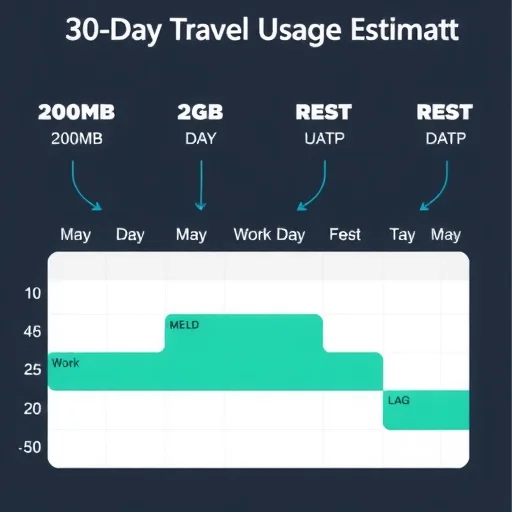
First, let’s understand why a one-month eSIM is different from shorter-term options. When you’re traveling for a week, you can usually get by with a fixed data bundle—say, 3GB or 5GB—and just monitor your usage to make sure you don’t run out. But over 30 days, your usage patterns become harder to predict. You might have heavy travel days where you’re using maps constantly, streaming video on trains, and uploading photos. You’ll also have lighter days where you’re mostly on hotel Wi-Fi. A 30-day plan needs to balance cost with flexibility, because running out of data halfway through your trip and having to buy a top-up while abroad can be inconvenient and sometimes more expensive than buying a larger bundle upfront.

The first decision you’ll face is whether to buy a fixed-data plan or an unlimited plan. Fixed-data plans give you a specific amount of data—common options are 10GB, 20GB, or 50GB—valid for 30 days. If you’re a light to moderate user who will have regular access to Wi-Fi, a fixed-data plan is usually the better value. For example, if you’re staying in hotels or Airbnbs with reliable Wi-Fi and only need data for navigation, messaging, and occasional social media, 10GB can easily last a month. On the other hand, if you’re a digital nomad working remotely, streaming video frequently, or traveling in areas where Wi-Fi is unreliable, an unlimited plan gives you peace of mind. Just be aware that “unlimited” often comes with caveats—fair usage policies that throttle speeds after a certain threshold, typically around 20GB to 50GB per month.
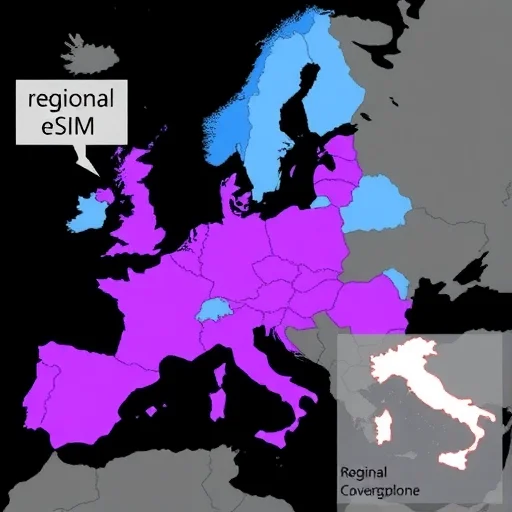
The second critical factor is coverage. For a month-long trip, you’re likely visiting multiple cities, regions, or even countries. A 30-day eSIM that works across multiple countries is essential if your itinerary crosses borders. Some eSIM providers offer regional plans—covering all of Europe, for instance, or all of Southeast Asia—with a single purchase. These regional plans often cost more than single-country plans, but they save you the hassle of buying a new eSIM every time you cross a border. If you’re staying in one country for the entire month, a single-country eSIM from a local carrier will usually give you the best speeds and most reliable coverage, because you’re connecting directly to that country’s primary network rather than roaming through a global provider’s partner agreements.
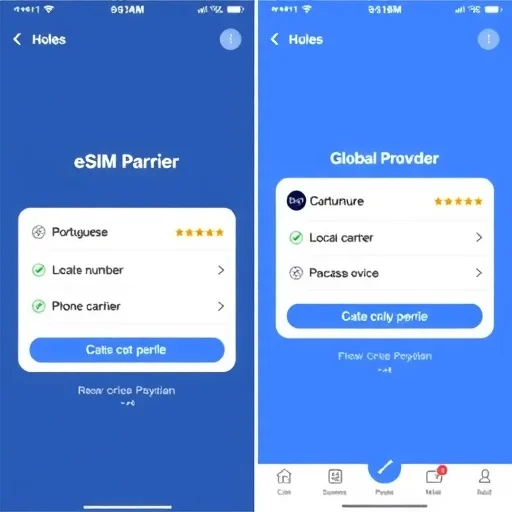
Let’s talk about network quality and prioritization. This is where many travelers get confused. When you buy an eSIM from a global provider like Airalo, Holafly, or Nomad, your data travels through that provider’s infrastructure before reaching the internet. This adds a small amount of latency and can occasionally result in slower speeds during peak times, especially if the provider uses “deprioritized” access on local networks. If you buy an eSIM directly from a local carrier in your destination country—for example, Vodafone UK, Orange France, or TIM Italy—you get full priority on that carrier’s network. For most travelers, the slight latency from a global provider is unnoticeable for everyday tasks like maps and messaging. But if you’re relying on your phone for video calls, remote work, or streaming HD content, paying a bit more for a direct local carrier eSIM can make a noticeable difference in consistency.
Now let’s walk through a few real scenarios to help you decide. Maria is a freelance graphic designer spending a month in Portugal. She needs reliable, fast data for client video calls and uploading large files. She’ll be moving between Lisbon, Porto, and the Algarve, but staying within Portugal the whole time. She chooses a 30-day eSIM from a local Portuguese carrier that offers 50GB of data at full-speed 5G access. She pays a bit more than she would for a global provider, but the reliability and speed are worth it for her work needs. She also appreciates that she has a local Portuguese number, which makes it easier to book reservations and communicate with local services.
Then there’s David, who’s backpacking across Southeast Asia for a month—Thailand, Vietnam, Cambodia, and Laos. He’s on a budget, mostly uses data for maps, hostel bookings, and WhatsApp, and doesn’t need a local phone number. He buys a regional eSIM that covers all four countries with 15GB of data valid for 30 days. The plan costs about half what he would pay for individual country SIMs, and he never has to stop at a mobile shop to swap cards. For his style of travel, the regional eSIM is perfect—it’s affordable, convenient, and provides enough data for his needs.
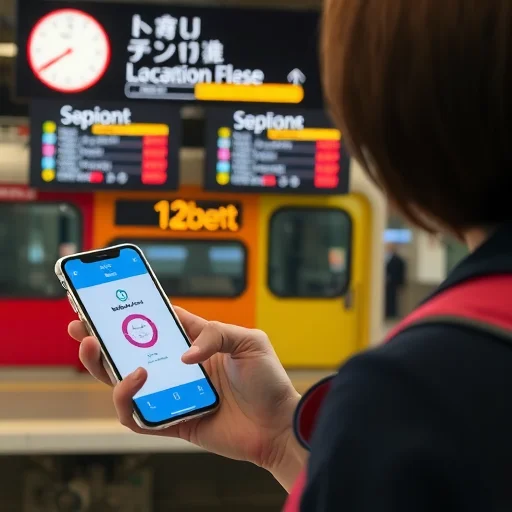
Finally, consider Sarah, who’s spending a month in Japan for a combination of work and leisure. She’ll have Wi-Fi in her Tokyo apartment but needs data when commuting, exploring other cities, and during weekend trips to rural areas. She’s worried about coverage outside major cities. She buys a 30-day eSIM from a Japanese carrier directly, which gives her access to the full nationwide network with no deprioritization. She also chooses a plan with unlimited data at a capped speed of 3Mbps—which is plenty for maps, messaging, and even streaming music, but costs significantly less than a full-speed unlimited plan. For her, the balance of coverage, cost, and simplicity makes this the right fit.
One often-overlooked aspect of 30-day eSIMs is the renewal and top-up process. Some providers allow you to add more data to an existing eSIM without buying a new one. Others require you to purchase a completely new eSIM when you run out. If you’re traveling for exactly a month, this might not matter. But if your trip extends beyond 30 days, or if you’re uncertain about your data needs, choosing a provider that offers easy top-ups through their app can save you headaches. Read the fine print before purchasing—some plans automatically expire after 30 days with no option to renew, while others let you purchase additional data packs that extend the validity.
Another factor to consider is the activation window. Many eSIMs must be installed within a certain timeframe after purchase—often 30 to 90 days—and the validity clock starts either when you install it or when it first connects to a network. For a month-long trip, you want to make sure you don’t install the eSIM too early and lose days before you even depart. Most travelers install the eSIM a day or two before travel, then activate it by connecting to the local network upon arrival. This gives you the full 30 days from the moment you land.
Ultimately, choosing the right 30-day eSIM comes down to matching the plan to your specific trip. Start by mapping out your itinerary: how many countries, what kind of coverage you need, and whether you’ll have reliable Wi-Fi. Then assess your data habits: light user under 1GB per day, moderate user up to 2GB, or heavy user who needs consistent high speeds. From there, decide between fixed-data and unlimited, and between a global provider and a direct local carrier. With these factors in mind, you can find a 30-day eSIM that keeps you connected without overpaying or dealing with constant top-ups in the middle of your trip. For month-long travel, choose between fixed-data and unlimited eSIM plans based on your usage habits and Wi-Fi access. Regional eSIMs simplify multi-country trips, while direct local carrier eSIMs offer the best speeds and reliability for single-country stays. Consider coverage, network priority, and top-up options to match the plan to your specific itinerary and connectivity needs.
#30DayDataPlanFINISHED
I travel for work constantly and now I just buy a 30-day regional eSIM for wherever I’m going. Having one consistent setup for a month saves so much mental energy compared to buying local SIMs in every city. Highly recommend for digital nomads.
Heads up for anyone considering unlimited plans: I bought an “unlimited” 30-day eSIM and got throttled after 30GB. Still plenty for my needs, but if you’re a heavy user, check the fair usage policy before buying. “Unlimited” doesn’t always mean unlimited full-speed.
One thing I wish I knew earlier: make sure your phone supports eSIM before committing! My friend’s older phone didn’t, and she ended up stuck with a plan she couldn’t use. Always check compatibility first.
I used a regional 30-day eSIM for a trip through Europe covering 6 countries and it was honestly life-changing. 20GB lasted me the whole month with maps, social media, and even some Netflix on trains. No SIM hunting in each country was worth every penny.
The local carrier route worked best for me when I stayed in Japan for a month. Got a 50GB eSIM from one of the local providers, speed was fantastic even in rural areas where my friend’s global eSIM struggled. Paid a bit more but zero frustration.