
Traveling to the Maldives? Here’s How to Choose the Best eSIM for Island‑Hopping Connectivity
If you’re dreaming of the Maldives—turquoise waters, overwater bungalows, and endless coral reefs—staying connected might not be the first thing on your mind. But once you’re there, you’ll quickly realize how essential reliable data is. You’ll want it for checking weather updates before boat transfers, messaging your resort host, navigating between islands, and sharing those breathtaking sunset photos. The best solution for most travelers is an eSIM: a digital SIM you can install before you depart. However, connectivity in the Maldives is unique—coverage varies dramatically between resort islands, local inhabited islands, and the open sea. This guide explains how to pick the right eSIM for your Maldivian adventure.
The Maldives has a single dominant mobile network operator: Dhiraagu, which has the most extensive coverage across the country, including many remote atolls. The other major operator is Ooredoo, which offers strong coverage in the capital Malé and many resort areas but can be less reliable in far‑flung atolls. Both operators provide 4G service, with Dhiraagu having a slight edge in overall reach. An eSIM lets you connect to these networks instantly without hunting for a physical SIM card at Velana International Airport after a long flight. You purchase and install the eSIM online beforehand, and it activates as soon as your phone detects a local network.

The key to choosing the best eSIM for the Maldives comes down to three factors: the underlying local network, the plan structure, and your specific itinerary—whether you’re staying at a private resort island, exploring local islands, or planning to be on a liveaboard boat. Most international eSIM providers partner with either Dhiraagu or Ooredoo. If you want the widest possible coverage—especially if you’re visiting multiple atolls, staying on a local island, or doing a diving liveaboard—look for an eSIM that explicitly uses Dhiraagu. Ooredoo‑based eSIMs are perfectly fine if you’re spending most of your time in Malé or at a resort in a well‑served atoll like North Malé or South Malé.
Next, consider how you’ll use data. Resort islands typically offer Wi‑Fi, but speeds can vary significantly—from excellent to barely usable depending on the property’s infrastructure. Many travelers prefer to have a reliable cellular data backup for messaging, maps, and social media. eSIM plans for the Maldives generally fall into fixed‑total categories: you get a set amount of data (5GB, 10GB, or more) valid for a specific period like 7, 15, or 30 days. Daily‑cap plans are less common in the Maldives due to the geography and network structure, but some global providers offer them. Unlimited high‑speed plans are available but tend to be pricey. For most travelers, a fixed‑total plan is the most straightforward: you buy a data package that matches your trip length and usage habits.
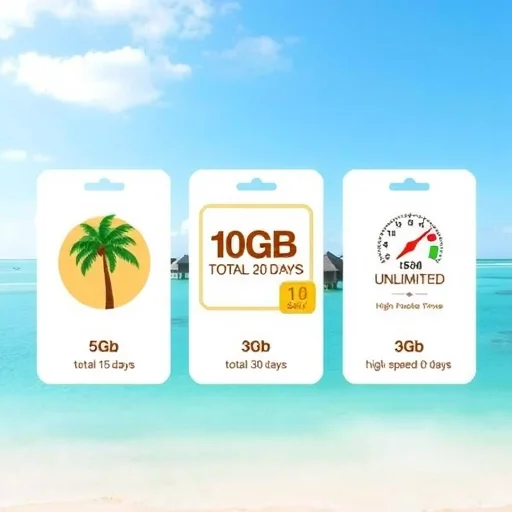
So which specific eSIM should you consider? For short stays (3 to 5 days) at a single resort, a modest 3GB or 5GB plan from a reputable global provider like Airalo, Nomad, or Holafly is usually sufficient. You’ll use data for messaging, occasional photo uploads, and maybe a video call. For week‑long trips (7 to 10 days) that include a mix of resort time and excursions, 10GB is a comfortable sweet spot. If you’re planning to stay on a local island (like Maafushi or Ukulhas) where Wi‑Fi may be less consistent, or if you’re on a liveaboard diving trip with no onboard Wi‑Fi, consider a 15GB or 20GB plan to ensure you have enough for navigation, research, and staying in touch. Some travelers also purchase a direct local prepaid eSIM from Dhiraagu or Ooredoo upon arrival—these can offer good value for longer stays and often include a local Maldivian phone number.
One important factor to keep in mind: connectivity in the Maldives is delivered via land‑based towers on islands, not widespread sea coverage. Once you’re on a boat moving between atolls, you may experience intermittent signal. Similarly, some remote resort islands have dedicated cell towers, while others rely on satellite backhaul, which can affect speeds during peak times. Checking coverage maps of your specific atoll before choosing an eSIM can help manage expectations. Dhiraagu generally has more towers across the outer atolls, making it the safer choice for travelers venturing beyond the main tourist hubs.
Another detail: many eSIMs are data‑only. That means WhatsApp, FaceTime, and Skype work perfectly, but you won’t have a traditional phone number for SMS verification. In the Maldives, this is rarely an issue—resorts, transfer companies, and tour operators typically communicate via WhatsApp or email. However, if you plan to make traditional phone calls locally, you may want a plan that includes voice. Dhiraagu’s tourist eSIM and Ooredoo’s “One Sim” both offer voice and data options, available at the airport upon arrival.
I recently helped a friend plan a 10‑day Maldives trip that included a liveaboard dive safari and a few nights at a resort. She was concerned about staying in touch with family and using navigation apps during transfers. We chose a Dhiraagu‑based eSIM from an international provider that offered 15GB for 30 days. She installed it before departure, and it activated the moment she arrived. During the liveaboard portion, she had reliable signal whenever the boat was near inhabited islands, which was enough for daily updates and weather checks. At the resort, she used the same plan as a backup when Wi‑Fi was slow. The peace of mind of having a consistent data source throughout made the trip stress‑free.
If you’re staying exclusively at a high‑end resort with excellent Wi‑Fi, you might be fine with a very small eSIM—or even none at all—using only resort Wi‑Fi. However, having a modest data plan is a reliable fallback for when Wi‑Fi dips or for staying connected during seaplane or speedboat transfers. If you’re island‑hopping, staying on local islands, or doing a liveaboard, investing in a larger data allowance on Dhiraagu’s network is strongly recommended. And if you’re staying for two weeks or more, consider buying a direct local eSIM from Dhiraagu at the airport for potentially better value and a local number.
Choosing the best eSIM for the Maldives is about understanding where you’ll be and how you’ll use data. Prioritize network reach—Dhiraagu for the widest coverage—and choose a data allowance that matches your itinerary. A few minutes of research before you go means you can arrive, connect instantly, and spend your time enjoying the islands rather than worrying about where to find a signal. For the Maldives, choose an eSIM based on network coverage: Dhiraagu offers the most extensive reach across outer atolls and liveaboard routes. Fixed‑total data plans suit most travelers; 5‑10GB is ample for a week. Consider a direct carrier eSIM with a local number for longer stays or voice needs.
I bought the Dhiraagu tourist eSIM at the airport. Had a local number and 20GB for a very reasonable price. The staff set it up in 5 minutes. Perfect for my 14-day trip across multiple atolls. Voice calls to local operators were a lifesaver.
Just got back from a 9-day liveaboard in the Maldives. Used a Dhiraagu-based eSIM from Saily with 10GB. Had signal whenever we were near islands—enough for daily check-ins and posting stories. Worked perfectly. Highly recommend going with Dhiraagu for coverage.
Stayed at a resort in North Malé Atoll and used an Ooredoo-based eSIM from Airalo. 5GB was plenty for a week. Resort Wi-Fi was decent but having my own data was great for calls and maps. Easy setup before I left.
Important: if you’re doing a seaplane transfer, download your resort’s contact info and maps beforehand. Signal can be spotty during the flight itself. Otherwise, eSIM worked flawlessly once we landed on the island.
For a short 4-day luxury resort stay, I honestly didn’t need much data. Wi-Fi was excellent, but I got a 3GB eSIM just in case. Used maybe half of it. Still worth having for peace of mind during transfers.