
If you’re buying an eSIM and have been seeing the 15GB plan, you might be wondering: is this really enough? It’s one of the most common data packs offered by global eSIM providers, often priced attractively, valid for 15 to 30 days, and marketed as the “best option” for travelers. But whether it’s enough for your trip isn’t a simple answer. It all depends on how you use your phone, where you’re going, and whether you have regular access to Wi-Fi. In this guide, I’ll break down how 15GB of data translates to real-world usage, walk you through different travel scenarios, and help you decide if a 15GB eSIM is your perfect match—or whether you should go bigger or smaller.
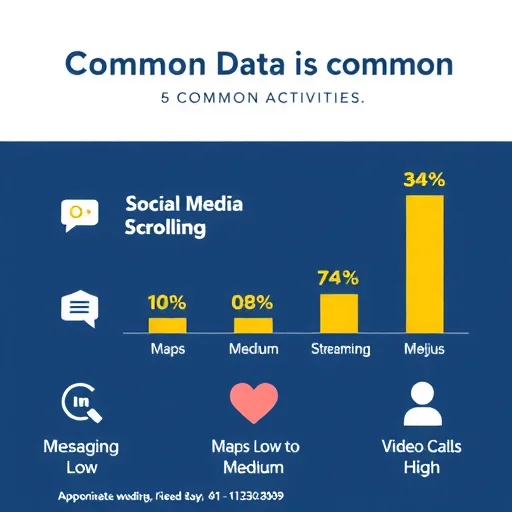
First, let’s put 15GB into perspective. Data is measured in gigabytes, and 15GB equals 15,000 megabytes. To understand what this means for your travels, it helps to know how much data common activities consume. Sending and receiving messages on WhatsApp or iMessage uses very little—even with photos, daily usage typically ranges from 5 to 10MB. Scrolling on Instagram or TikTok is heavier: one minute of TikTok can use 10 to 20MB, while browsing stories and photos on Instagram may consume 100 to 200MB per hour. Maps and navigation are a traveler’s staple, using about 10 to 20MB per hour of active use. Streaming music on Spotify or Apple Music uses around 40 to 80MB per hour. Video streaming is the biggest consumer: standard-definition Netflix or YouTube uses about 250MB to 500MB per hour, while HD can consume 1GB to 3GB per hour. A video call on Zoom or FaceTime uses about 500MB to 1GB per hour.
Now, let’s translate this into a traveler’s daily usage. A light user—someone who uses maps for a few hours, sends messages all day, checks social media briefly, and streams music for an hour—might use 500MB to 800MB per day. At that rate, 15GB could last 18 to 30 days. A moderate user—adding an hour of standard-definition video streaming, more active social media use, and occasional video calls—might use 1GB to 1.5GB per day. For that user, 15GB will last 10 to 15 days. A heavy user—streaming HD video daily, making multiple video calls, downloading files, and using the phone as a hotspot—can easily consume 2GB to 4GB per day, meaning 15GB might not last even a week. So the first question to ask yourself is: how long is your trip? 15GB eSIMs are often packaged with validity periods that match their data allowance—common options include 15GB for 15 days, 15GB for 30 days, or 15GB with no expiration but a fixed usage window. If your trip is 7 to 10 days and you’re a moderate user, 15GB may be sufficient. But if you’re traveling for 30 days and are a heavy user, you’ll likely run out before the end.
The second factor is Wi-Fi availability—something most people underestimate. If you’re staying in hotels, Airbnbs, or co-working spaces with reliable Wi-Fi, you can offload most of your heavy data usage—video streaming, large downloads, software updates—onto those connections. Then, when you’re out and about, your eSIM data is used purely for navigation, messaging, quick social media checks, and occasional calls. In this case, even a moderate traveler might only use 300MB to 500MB per day, making 15GB stretch for 30 days or more. Conversely, if you’re camping, road-tripping, or staying somewhere with unreliable Wi-Fi, your eSIM becomes your primary connection, and 15GB will drain much faster. Let’s look at a few real-world scenarios to help you decide. Emma is traveling to Japan for two weeks. She’s staying in a hotel with Wi-Fi, so she streams Netflix and uploads heavily at night. During the day, she uses maps to navigate cities, sends messages, takes photos for social media, and occasionally browses Instagram. She estimates her daily eSIM usage at around 800MB. A 15GB eSIM would give her roughly 18 days of coverage—plenty for her 14-day trip, with a little buffer. She chose the 15GB/30-day plan and feels confident she won’t run out.
Now consider David, a digital nomad spending a month in Bali. He’s staying in a villa with unreliable Wi-Fi, so he uses his phone as a hotspot for his laptop several hours a day. He’s on video calls, streams music throughout the day, and uses maps while exploring. His daily usage averages 2.5GB. For him, a 15GB eSIM would last less than a week. Instead, he opted for a 50GB or unlimited plan covering the entire month—or he bought a local SIM with a larger data allowance better suited to frequent use. Then there’s Sarah, backpacking across Europe for 10 days, visiting three countries. She stays in hostels with Wi-Fi but spends most of her day out exploring. She uses maps heavily, sends messages and photos to friends, and occasionally streams music. She doesn’t watch videos or make video calls. Her daily usage is around 600MB. A 15GB eSIM provides more than enough data for her 10-day trip, and the regional plan covers all three countries with no additional purchases needed. For her, 15GB is the perfect sweet spot—affordable, ample, and stress-free.
An important question to understand about 15GB eSIMs is how they handle data once you hit the limit. Different providers have different policies. Some will cut off data entirely once you exceed the cap, requiring you to purchase a top-up. Others will slow down speeds to a very modest level—typically 128kbps or 256kbps—fine for messaging and email, but not for maps, social media, or streaming. Before buying, check the provider’s policy on data exhaustion. If you’re close to your estimated usage, it’s worth knowing whether you’ll get a grace period with slow data or need to top up immediately. Another factor is whether your phone and eSIM support 5G. Many 15GB eSIM plans offer 4G/LTE speeds, which are perfectly adequate for most travel needs. However, if you have a 5G-capable phone and are traveling in an area with strong 5G coverage, a plan that includes 5G access can make a noticeable difference for video calls, large file transfers, and streaming. Check the plan details—some 15GB eSIMs include 5G, while others are limited to 4G speeds. Let’s talk about cost. 15GB eSIMs typically fall into the “mid-tier” pricing category. Depending on the region and provider, you can expect to pay between $15 and $40 for 15GB valid over 15 to 30 days. Compared to your home carrier’s daily roaming fees—which can cost $10 or more per day—the savings are obvious. The real question isn’t whether 15GB is cheaper than roaming—it almost always is—but whether it’s the right fit compared to other eSIM options. A 5GB plan might be much cheaper but insufficient for longer trips. A 50GB plan might be overkill and too expensive. For many travelers, 15GB covers one to two weeks of data needs without paying for gigabytes you won’t use.
A frequently overlooked strategy is combining your 15GB eSIM with offline tools. Before your trip, download offline maps for your destination—Google Maps lets you download entire cities or regions for offline use, which dramatically reduces map data consumption. Download music playlists on Spotify or Apple Music so you don’t stream while on the move. Pre-download Netflix shows or YouTube videos over Wi-Fi. These simple habits can stretch your 15GB plan far beyond its apparent capacity, turning it into enough data for a longer trip than the numbers suggest. Finally, consider your backup options. If you choose a 15GB eSIM and find yourself running low, most providers make it easy to add more data. Some allow you to purchase top-up packs to add extra data to your existing eSIM; others require you to buy a new one. Before traveling, check your provider’s top-up process. Knowing you can add 5GB or 10GB with just a few taps in the app gives you the confidence to start with a 15GB plan, knowing you won’t be locked in if your usage turns out higher than expected. In the end, whether 15GB is enough depends on your travel style, destination, and habits. If you have regular Wi-Fi access, stick to moderate usage like maps and messaging, and your trip is no longer than two weeks, 15GB may be just right. If you’re a heavy user, traveling for a month with limited Wi-Fi, or relying on your phone for work, you’ll likely want a larger plan. The best approach is to honestly estimate your daily usage, factor in Wi-Fi availability, and choose a plan that gives you a comfortable buffer without paying for data you won’t use. With a little planning, a 15GB eSIM can be the perfect travel companion. A 15GB eSIM typically lasts 10 to 30 days, depending on your usage habits and Wi-Fi availability. Light to moderate users with regular Wi-Fi access can easily stretch 15GB over a two-week trip, while heavy users or those without reliable Wi-Fi may need a larger plan. Offline maps and pre-downloaded content help maximize your data allowance.
15GB非常适合我12天的意大利之旅。每天使用地图,大量的Instagram,甚至一些FaceTime通话。最后还剩2GB。如果你在酒店使用Wi-Fi,那就足够了。
我犯了一个错误,在没有可靠Wi-Fi的情况下,为期3周的工作旅行只能获得15GB。10天后用完了。经验教训:如果你在远程工作或大量流媒体,那就扩大规模。
一个提示:出发前下载离线地图。我大部分时间都在离线使用谷歌地图,我的15GB eSIM持续了两倍的时间。小习惯,大差别。
我喜欢15GB的计划通常是每GB的最佳值。5GB的计划通常每GB定价过高,而50GB的计划超出了我的需求。15GB是我10-14天旅行的最佳选择。
用完数据后,检查速度的细则。当我达到限制时,我的15GB eSIM降至128kbps,这对于消息传递和基本地图来说实际上是可以的。这让我在过去的两天里不用买加满油。