
Do All Cell Phones Have SIM Cards? Here’s the Complete Answer
If you’ve ever bought a new phone or traveled internationally, you’ve likely encountered the question: does my phone need a SIM card? The short answer is that almost all modern cell phones use some form of SIM technology—either a physical SIM card or an embedded eSIM. However, there are exceptions, particularly with older phones, certain CDMA devices, and a few specialized models. This guide explains everything you need to know about SIM cards, which phones have them, and how to determine what your phone uses.
First, let’s understand what a SIM card does. A SIM (Subscriber Identity Module) card is a small chip that identifies your phone to a mobile network. It stores your phone number, network authentication details, and sometimes contacts. Without a SIM card (or an eSIM), your phone cannot connect to a cellular network for calls, texts, or mobile data—though it can still use Wi‑Fi.
So, do all cell phones have SIM cards? The answer depends on the phone’s age, technology, and region.
**1. Modern Smartphones: Yes, But in Different Forms**
Almost all smartphones sold today—whether iPhone, Samsung Galaxy, Google Pixel, or others—include SIM technology. However, there are two types: physical SIM cards and eSIMs (embedded SIMs).
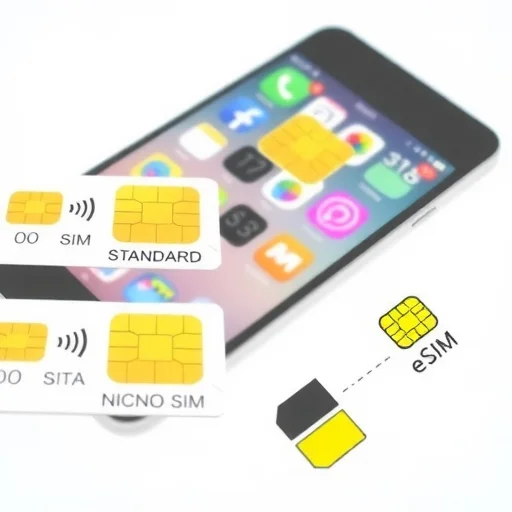
**Physical SIM cards** are the traditional removable cards. Most smartphones have a physical SIM tray that holds a nano SIM (the smallest size). Even phones that also support eSIM typically include a physical SIM slot as well.
**eSIMs** are digital SIMs embedded into the phone’s hardware. You don’t insert a card; instead, you download a carrier profile. Many modern phones support eSIM alongside a physical SIM. Some models, like the US version of the iPhone 14 and later, are eSIM‑only—they have no physical SIM slot at all.
So while almost all modern cell phones have some form of SIM capability, it may not be a removable card.
**2. Older Phones and Feature Phones**
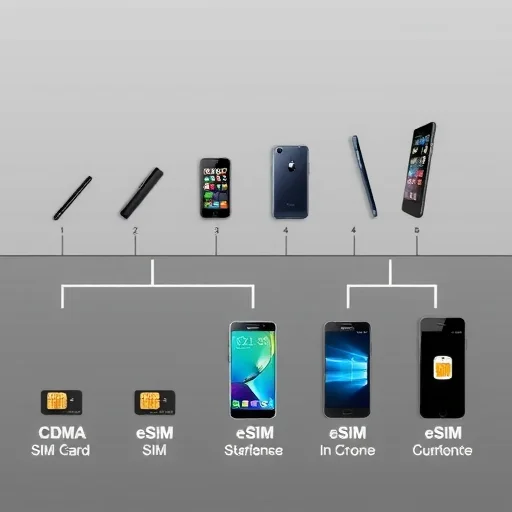
Older cell phones (from the 1990s and early 2000s) used SIM cards as well, but often in a larger format—standard SIM or mini SIM. These were removable cards. However, some older phones, particularly those on the CDMA network in the United States (like early Verizon and Sprint phones), did not use SIM cards. Instead, they used a technology where the subscriber information was programmed directly into the phone’s hardware. Those phones did not have a SIM slot. If you have a very old phone (pre‑2010) from a CDMA carrier, it might not have a SIM card.
**3. CDMA vs. GSM Networks**
Historically, there were two main mobile network technologies: GSM (Global System for Mobile Communications) and CDMA (Code Division Multiple Access). GSM phones always used SIM cards. CDMA phones (used by carriers like Verizon, Sprint, and US Cellular in the early days) often did not use SIM cards; the phone’s identity was tied to the device itself, not a removable card. However, as 4G LTE and 5G became standard, even former CDMA carriers adopted SIM cards (and now eSIMs) for LTE/5G connectivity. Today, virtually all phones on major carriers use SIM cards or eSIMs.
**4. Specialized Devices**
Some cellular devices are not phones. For example:
**Tablets** with cellular connectivity often have a SIM slot (or eSIM) but may be sold without a SIM card pre‑installed.
**Smartwatches** with cellular (like Apple Watch Cellular) use eSIM technology, but they do not have physical SIM slots.
**IoT devices** (like GPS trackers or smart meters) often use SIM cards (sometimes embedded) but are not “phones” in the traditional sense.
**5. Regional Variations**
In some regions, phones may be sold without SIM cards, but they have a SIM slot. You need to insert your own SIM card from a carrier to use cellular service. In other regions, phones may be carrier‑locked to a specific network and come with a pre‑installed SIM. The presence of a SIM slot is nearly universal, but whether a SIM card is included depends on the purchase type.
**6. eSIM‑Only Phones**
A growing number of phones are eSIM‑only, meaning they have no physical SIM slot. The most prominent example is the iPhone 14, 15, and 16 models sold in the United States. These phones rely entirely on eSIM technology. Other manufacturers, like Google with the Pixel 8 and later, offer eSIM support but still include a physical SIM slot. If you have an eSIM‑only phone, you cannot use a physical SIM card—you must use an eSIM.
**7. How to Check If Your Phone Has a SIM Card**
If you’re unsure whether your phone uses a SIM card or eSIM, here’s how to check:
**Physical SIM:** Look for a small tray on the side (or sometimes top) of your phone. There’s usually a tiny hole to insert a SIM ejector tool. If you see a tray, your phone uses a physical SIM.
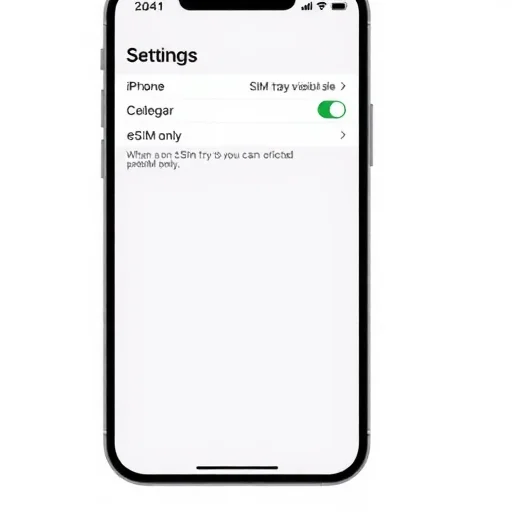
**eSIM:** Go to Settings > Cellular (or Mobile Data). If you see an option to “Add Cellular Plan” or “Add eSIM,” your phone supports eSIM. You can also check your phone’s specifications online.
**8. What If Your Phone Doesn’t Have a SIM Slot?**
If your phone has no physical SIM slot and doesn’t support eSIM, it likely cannot connect to a cellular network at all (some older CDMA phones are in this category). However, such phones are rare today. If you have a newer phone and it doesn’t have a SIM tray, it’s almost certainly eSIM‑only.
**9. Can You Use a Phone Without a SIM Card?**
Yes, you can use a phone without a SIM card for Wi‑Fi‑only functions: browsing, apps, messaging over Wi‑Fi, etc. You just won’t have cellular connectivity for calls, texts, or mobile data when away from Wi‑Fi.
**10. The Future: Fewer Physical SIMs**
The trend is toward eSIM‑only devices. Apple has already moved to eSIM‑only in the US, and other manufacturers are likely to follow. Over time, physical SIM cards may become obsolete, but for now, the majority of phones still have physical SIM slots or offer both options.
In summary, almost all modern cell phones have some form of SIM technology—either a physical SIM card, an eSIM, or both. The exceptions are very old CDMA phones (pre‑LTE) and a few specialized devices. If you have a phone made in the last decade, it almost certainly uses a SIM card or eSIM. To be sure, check for a SIM tray or look in your settings for eSIM options. Almost all modern cell phones use SIM technology—either a physical SIM card (removable) or an eSIM (embedded digital SIM). The exceptions are very old CDMA phones (pre‑LTE) and some specialized devices. eSIM‑only phones (like US iPhone 14+) have no physical SIM tray. Check your phone’s SIM tray or settings to confirm.
eSIMGuideFINISHED

I just bought an iPhone 15 in the US and was surprised it had no SIM tray. Took me a while to figure out eSIM. Good to know this is becoming the norm.
Important tip: If you travel internationally, check if your phone has a physical SIM slot or is eSIM‑only. My eSIM‑only phone was fine, but I had to make sure my destination supported eSIM before I went.
My old Verizon phone from 2008 didn’t have a SIM card. I remember it was a pain to switch phones. Glad those days are over. Great explanation of the CDMA vs. GSM history.
My tablet has a SIM slot but no eSIM. Works fine with a physical data SIM. Not all devices support eSIM yet.
I have a Google Pixel 7—it has both a physical SIM slot and eSIM. Best of both worlds. I use a physical SIM for my home number and eSIM for travel data. Perfect setup.