
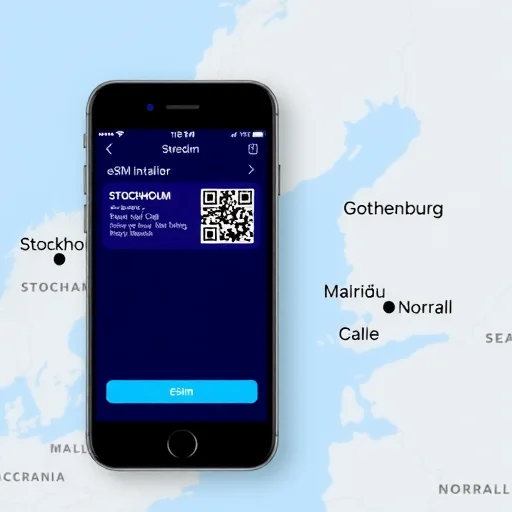
Traveling to Sweden? Here’s How to Choose the Best eSIM for Reliable Coverage
If you’re planning a trip to Sweden—whether it’s exploring the cobblestone streets of Gamla Stan in Stockholm, taking a ferry through the archipelagos, or road‑tripping through the forests of Norrland—staying connected is essential. Sweden has one of the world’s most advanced mobile networks, with widespread 4G and expanding 5G coverage. The best solution for most travelers is an eSIM: a digital SIM you can install before you depart. But with several network options and a variety of eSIM providers, how do you choose the best one for your Swedish adventure? This guide breaks down everything you need to know.
Sweden’s mobile market is dominated by three major operators: Telia, Tele2, and Telenor. Telia is the former state monopoly and has the most extensive coverage, particularly in rural areas, the north, and along the coast. Tele2 and Telenor (which share a network through a joint venture called Net4Mobility) also offer excellent coverage, especially in cities and along major highways. A fourth operator, Tre (3), has good urban coverage but can be less reliable in remote areas. When choosing an eSIM, understanding which local network the provider uses is important—especially if you’re planning to travel outside the major cities.
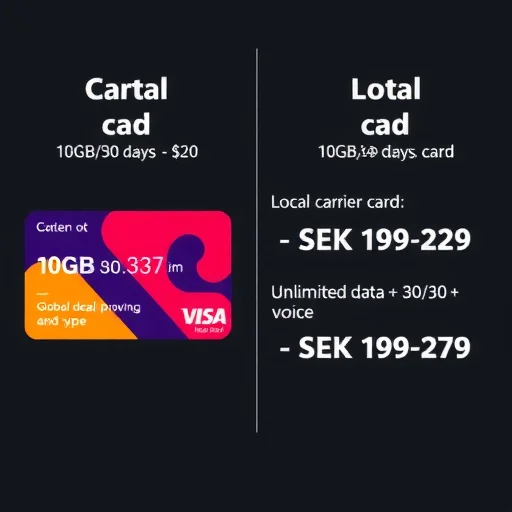
eSIM plans for Sweden generally fall into two categories: global eSIM providers and local carrier eSIMs. Global providers like Airalo, Nomad, Holafly, and Saily offer plans designed for travelers. These are convenient—you buy and install them before you leave home, and they activate the moment you land. Most of these plans are data‑only and typically operate on Telia, Tele2, or Telenor networks. They’re ideal for short to medium trips (3 to 14 days) and offer fixed‑total data packages (3GB, 5GB, 10GB, etc.) at competitive prices. For a one‑week trip, a 5GB or 10GB plan usually costs between $10 and $25.
Local carrier eSIMs—from Telia, Tele2, Telenor, or Tre—are also available. These can be purchased online or at carrier shops upon arrival. They often come with larger data allowances, include a local Swedish phone number, and sometimes offer unlimited talk and text. They’re a better value for longer stays (two weeks or more) or if you need a local number for things like booking restaurants, using local apps like Swish (mobile payments), or receiving SMS verification codes. However, they require a bit more setup and may involve registration with your passport.
So which should you choose? Let’s match them to travel styles.
If you’re taking a short city trip—say, 4 to 7 days in Stockholm, Gothenburg, or Malmö—a global eSIM provider is your best bet. You can install it before departure, and you’ll have data as soon as you land. A 5GB plan is typically enough for a week if you use maps, ride‑hailing, messaging, and occasional social media. If you’re a heavier user, 10GB gives you comfortable breathing room. Providers like Airalo and Nomad have user‑friendly apps, and you can top up easily if you need more data. Since these plans usually use top‑tier Swedish networks, you’ll have excellent coverage in cities.
If you’re staying longer—two weeks or more—or if you’re traveling beyond the cities, including the archipelagos, the northern regions, or rural areas, a local carrier eSIM becomes more attractive. Telia, in particular, is known for its superior coverage in remote and northern Sweden. For example, Telia’s prepaid “Telia Kontant” eSIM can be purchased online or at a Telia shop. A typical plan might give you 20GB of data, unlimited calls and texts within Sweden, and a local number for around SEK 199–299 (roughly $20–$30). That’s significantly cheaper per GB than most global provider plans for longer stays. Having a local number is also handy for using Swedish apps or for making local calls.
Now, let’s talk about a few specific providers and their strengths for Sweden.
**Airalo** offers Sweden plans that typically run on Telia or Tele2. Its plans are data‑only, with options ranging from 1GB to 20GB. Airalo’s app is polished, and its customer support is responsive. It’s a great choice for travelers who want a simple, reliable experience.
**Nomad** offers both fixed‑total and daily‑cap plans for Sweden. Its plans usually use Telia or Tele2. Nomad’s daily‑cap plans (e.g., 1GB per day) are popular with travelers who want predictable daily usage.
**Holafly** specializes in unlimited data plans. If you’re a heavy data user—someone who streams video, joins video calls, or just wants to never think about data limits—Holafly’s unlimited Sweden plan is appealing. It typically uses Telia’s network. However, it’s more expensive than fixed‑total plans for light users.
**Telia Sweden** offers its own prepaid eSIM, which is ideal for travelers who need wide coverage, especially in the north. You can purchase it online (with passport registration) or at a Telia shop upon arrival. Plans are flexible, and you get a Swedish number.
**Tele2** and **Telenor** also offer prepaid eSIMs, often with competitive pricing, though their rural coverage is slightly less extensive than Telia’s.
I recently helped a friend plan a 12‑day trip that included Stockholm, a few days in the archipelago, and a road trip up to the High Coast (Höga Kusten) in northern Sweden. She was debating between Airalo and a local Telia eSIM. Since she needed a local number to contact boat tour operators and wanted the best coverage in remote areas, we went with a Telia prepaid eSIM. She purchased it online before her trip, completed the identity verification, and installed it at home. The 20GB plan cost SEK 249 (about $24). She had coverage even on the archipelago ferries and in the northern forests—places where some friends on other networks lost signal. The local number was also useful for calling a guesthouse when she arrived late.
Another friend spent a long weekend in Gothenburg. She used a 5GB data‑only eSIM from Airalo, which cost about $15. She installed it before departure, and it worked perfectly for navigating the city, using trams, and posting on social media. She didn’t need a local number, so the simplicity of a global provider was perfect.
One important advantage of using a Swedish carrier eSIM is EU roaming. Because Sweden is in the EU, any plan purchased from a Swedish carrier can be used in other EU countries without roaming fees. If you’re planning a multi‑country European trip, a Swedish eSIM can serve as your single connectivity solution across the continent.
Another detail: Sweden is a highly digital society. You’ll likely use apps for public transport, parking, and even some payments. Having a reliable data connection is essential. Also, if you’re planning to visit the far north (Lapland) for activities like dog sledding or northern lights viewing, Telia’s network is the most reliable in those remote areas.
When comparing plans, don’t just look at price per GB. Consider the provider’s reputation, the underlying network, the ease of installation and top‑ups, and whether the validity period matches your trip. A plan that uses Telia’s network might cost a few dollars more, but it’s worth it for peace of mind if you’re venturing outside major cities.
Ultimately, the best eSIM for Sweden depends on your trip length and itinerary. For short city trips, global providers offer unbeatable convenience. For longer stays or trips that include rural areas, archipelagos, or the north, local carrier eSIMs—especially Telia—provide better value and often include a local number. A few minutes of planning before you go means you can land, connect instantly, and focus on enjoying Sweden’s stunning landscapes and vibrant cities. For Sweden, choose an eSIM based on trip length and coverage needs: global providers (Airalo, Nomad) offer convenience for short city trips; local carrier eSIMs (especially Telia) provide better value, local numbers, and the widest coverage in rural areas, archipelagos, and the north. EU roaming is included on all Swedish carrier plans.
TravelSwedenConnectivityFINISHED


I used Airalo for a week in Stockholm. 5GB was plenty for maps, social media, and messaging. Installed before I left, worked perfectly. Great for short city trips.
Important tip: If you’re going to the archipelago or the far north, Telia’s coverage is the best. I had signal on the ferry to Vaxholm and in the forests near Östersund. Worth the extra few euros.
If you’re traveling to multiple EU countries, a Swedish eSIM works across the EU without roaming fees. I used my Tele2 plan in Denmark and Finland with no extra charges. Perfect for multi‑country trips.
I used Holafly’s unlimited plan for a 10-day trip. Streamed music on trains, used video calls, never worried about data. Network was Telia, so coverage was excellent even in remote areas.
Used a Telia prepaid eSIM for a 2-week trip across Sweden, including the north. Had coverage in places where my friends on other networks lost signal. The local number was essential for calling hotels. Highly recommend.