
Do Androids Have SIM Cards? Here’s the Complete Answer
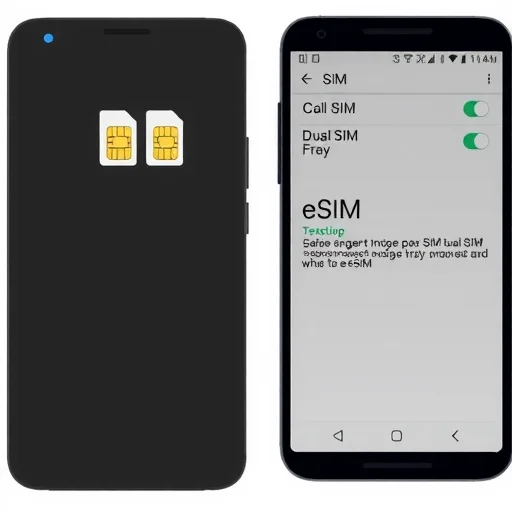
If you’ve ever used an Android phone or are considering buying one, you might wonder: do Androids have SIM cards? The short answer is yes—almost all Android phones use SIM cards, either in the form of a physical SIM card (removable) or an eSIM (embedded digital SIM). However, the type and number of SIMs can vary significantly between models, manufacturers, and regions. This guide explains everything you need to know about SIM cards in Android phones, including physical SIM slots, eSIM support, dual SIM capabilities, and how to check what your Android phone uses.
First, let’s understand what a SIM card does. A SIM (Subscriber Identity Module) card is a small chip that identifies your phone to a mobile network. It stores your phone number, network authentication details, and sometimes contacts. Without a SIM card (or an eSIM), your phone cannot connect to a cellular network for calls, texts, or mobile data—though it can still use Wi‑Fi.
**Do All Android Phones Have Physical SIM Cards?**
Most Android phones have at least one physical SIM card slot. The vast majority use the nano SIM size, which is the smallest physical SIM format. However, there are a few exceptions:
**eSIM‑only Android phones** are rare but exist. For example, some Google Pixel models sold in certain regions may offer eSIM‑only variants, but most still include a physical SIM slot. Unlike iPhones in the US (which are eSIM‑only for recent models), Android manufacturers have generally kept the physical SIM slot even on phones that support eSIM.
**Very old Android phones** (pre‑2010) may have used standard or micro SIM cards, but they still had physical SIM slots.
**CDMA‑only Android phones** from the early 4G era (like some older Verizon or Sprint models) sometimes had SIM cards for LTE but relied on CDMA for voice—these still had SIM slots.
For the vast majority of Android phones sold today, you will find a physical SIM tray. It’s usually located on the side of the phone, with a tiny hole to insert a SIM ejector tool.
**Do Android Phones Support eSIM?**
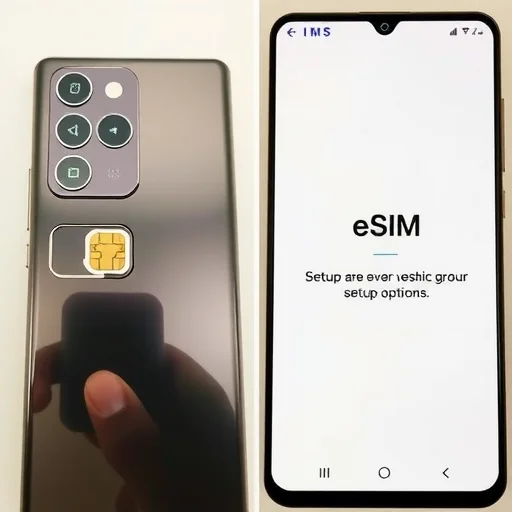
Yes, many modern Android phones support eSIM. eSIM (embedded SIM) is a digital SIM profile that you download instead of inserting a physical card. eSIM support on Android is widespread among flagship and mid‑range models, but not universal. Here are some examples:
**Google Pixel:** Pixel 3 and newer support eSIM. The Pixel 3, 4, 5, 6, 7, 8, and 9 all have eSIM capability (usually alongside a physical SIM slot).
**Samsung Galaxy:** Galaxy S20 series and newer (S20, S21, S22, S23, S24, S25) support eSIM. The Z Fold and Z Flip series also support eSIM. However, some carrier‑locked versions may have eSIM disabled.
**Motorola:** Select models like the Moto G54, G84, and Razr series support eSIM.
**Sony:** Xperia 1 V, 5 V, and newer support eSIM.
**OnePlus:** OnePlus 12, 13, and newer support eSIM in most regions.
**Xiaomi:** Xiaomi 13, 14, and newer support eSIM in global versions (Chinese models may not).
Even on phones that support eSIM, almost all retain a physical SIM slot. So you can use a physical SIM, an eSIM, or both.
**Dual SIM on Android**
Many Android phones support dual SIM functionality. This can be achieved in several ways:
**Dual physical SIM:** Some phones have two physical SIM slots. This is common in many Asian and European models.
**One physical SIM + one eSIM:** Most modern Android phones with eSIM support allow you to use one physical SIM and one eSIM simultaneously.
**Two eSIMs:** Some newer Android phones (like the Google Pixel 7 and later, Samsung Galaxy S23 and later) support two active eSIMs, though this is still less common than the physical+eSIM combo.
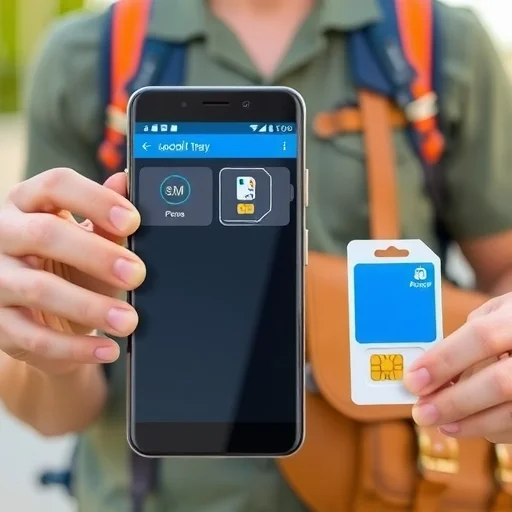
Dual SIM is especially useful for travelers who want to keep their home number active while adding a local data plan, or for people who separate work and personal lines.
**How to Check If Your Android Phone Has a SIM Card or eSIM**
If you’re unsure what your Android phone uses, here’s how to check:
**Physical SIM:** Look for a small tray on the side of your phone. There’s usually a tiny hole—insert a SIM ejector tool or a paperclip to open it. If you see a tray, your phone has a physical SIM slot.
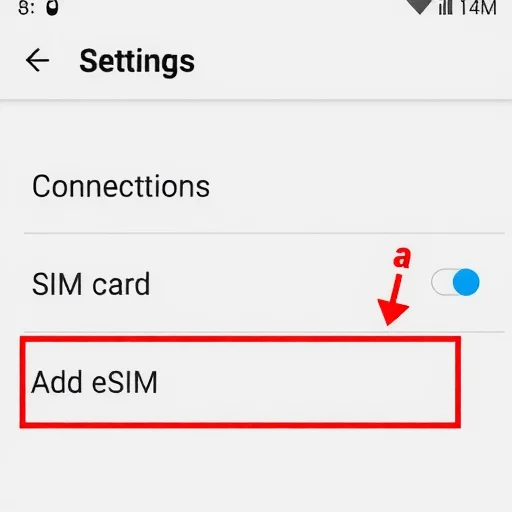
**eSIM:** Go to Settings > Connections > SIM Manager (or similar). If you see an option to “Add eSIM” or “Add mobile plan,” your phone supports eSIM. You can also check your phone’s specifications online.
**What About Carrier‑Locked Android Phones?**
If you bought your Android phone from a carrier (like Verizon, AT&T, T‑Mobile, etc.), it may be carrier‑locked. That means it will only work with that carrier’s SIM cards. However, the phone still has a SIM slot—it’s just restricted to that carrier. Some carrier‑locked phones also have eSIM functionality disabled. If you want to use a different carrier’s SIM or eSIM, you’ll need to unlock the phone (carriers usually unlock phones after they’re paid off or after a certain period).
**Traveling with an Android Phone**
If you’re traveling internationally, Android phones offer great flexibility:
If your phone has a physical SIM slot, you can buy a local physical SIM card in many countries. This is often the cheapest option for data.
If your phone supports eSIM, you can buy a travel eSIM online before you leave (from providers like Airalo, Nomad, Holafly) and have data the moment you land.
If your phone supports dual SIM, you can keep your home SIM active for calls and texts while using a local physical SIM or eSIM for data.
**Are There Any Android Phones Without SIM Cards?**
Extremely rare. Some Android‑based devices (like tablets, smartwatches, or IoT devices) may have cellular connectivity but use eSIM or soldered‑on SIM modules. But for smartphones, virtually all Android phones have at least one SIM slot. Even phones marketed as “eSIM‑only” in some regions are rare; most manufacturers still include a physical SIM tray.
**The Future of SIMs on Android**
While eSIM adoption is growing, Android manufacturers have been slower than Apple to move toward eSIM‑only devices. Most Android phones continue to offer physical SIM slots alongside eSIM support. This gives users the best of both worlds: the flexibility of eSIM and the universality of physical SIMs. For the foreseeable future, Android phones will likely retain physical SIM slots, especially given the diverse global market where physical SIMs are still dominant.
In summary, yes, Android phones have SIM cards—either physical, eSIM, or both. The vast majority have at least one physical nano SIM slot. Many modern Android phones also support eSIM, allowing you to use digital profiles. Dual SIM configurations (physical+eSIM or dual physical) are common, offering great flexibility for travelers and multi‑line users. To find out what your Android phone supports, check the SIM tray and look in your settings for eSIM options. Most Android phones have physical SIM slots (nano SIM). Many modern Android phones also support eSIM, allowing digital SIM profiles. Dual SIM (physical+eSIM or dual physical) is common, enabling two active lines. eSIM‑only Android phones are rare; physical slots remain standard. Check SIM tray and settings for eSIM support.
eSIMAndroidGuideFINISHED

My Samsung S23 has both a physical SIM slot and eSIM. I use a physical SIM for my home number and a travel eSIM for data when I’m abroad. Works perfectly. Love the flexibility.
Heads-up: Some carrier‑locked Android phones disable eSIM. I bought a locked AT&T phone and couldn’t use eSIM until I got it unlocked. Check before you buy if you plan to use eSIM.
I have a Google Pixel 8 and use dual SIM—one physical SIM for work, one eSIM for personal. Both active at the same time. No need to carry two phones. Great feature.
Important tip: If you’re buying an Android phone for travel, check if it supports eSIM. Not all mid‑range models do. My Moto G Power didn’t have eSIM, so I had to use physical SIMs only.
Traveling with a dual‑SIM Android is so convenient. I keep my home SIM in the slot and use an eSIM for local data. No swapping cards. Highly recommend for frequent travelers.