
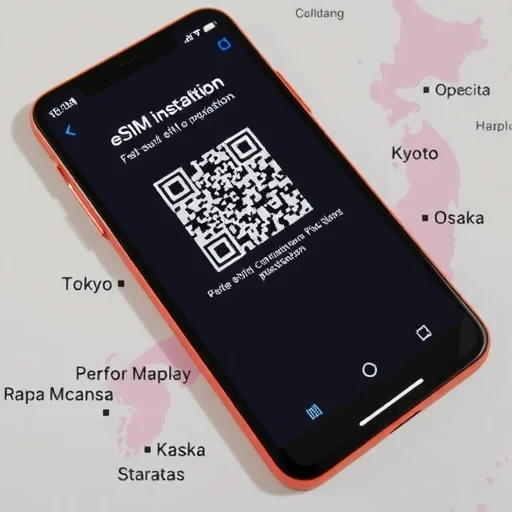
Traveling to Japan? Here’s How to Choose the Best Digital SIM Card
If you’re planning a trip to Japan—whether it’s the neon lights of Tokyo, the historic temples of Kyoto, or the snowy slopes of Hokkaido—staying connected is essential. You’ll want reliable data for navigating the intricate train system,
Japan has one of the world’s most advanced mobile networks, with three major carriers: NTT Docomo, au (KDDI), and SoftBank. Docomo has the most extensive coverage, particularly in rural areas and the countryside. au also offers strong coverage, with a focus on urban centers. SoftBank is excellent in cities but can be less reliable in remote regions. When choosing a digital SIM for Japan, the underlying network matters. For travelers venturing beyond major cities—like hiking in the Japanese Alps or exploring rural Shikoku—a plan that uses Docomo’s network is your safest bet.
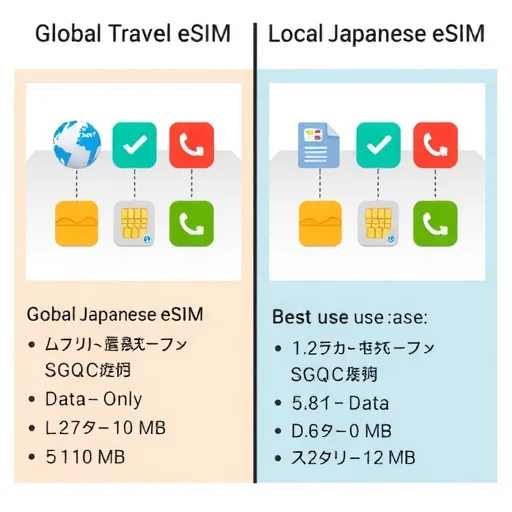
There are two main types of digital SIM cards for Japan: global travel eSIMs and local Japanese eSIMs.
**Global travel eSIMs** are offered by providers like Airalo, Nomad, Holafly, and Ubigi. These are designed specifically for travelers. They are data‑only (no voice or SMS, though some now offer voice options) and you can buy them online before you travel. You install them via QR code, and they activate when you land. They typically use Docomo or SoftBank networks. These are ideal for short trips (3 to 14 days) and for travelers who only need data for maps, messaging, and social media. Plans range from 1GB to 20GB or unlimited, with prices from $5 to $40.
**Local Japanese eSIMs** are offered directly by Japanese carriers or MVNOs like IIJmio, NTT Docomo (Japan Welcome SIM), and Rakuten Mobile. These are full‑service eSIMs that give you a local Japanese phone number, voice, SMS, and data. They are often better value for longer stays (two weeks or more) or if you need a local number for reservations, ride‑hailing apps, or SMS verification. Some can be purchased online before travel; others require a visit to a carrier store or airport kiosk upon arrival.
So which should you choose? Let’s match them to travel styles.
If you’re taking a short trip (5 to 10 days) and only need data for maps, translation, and social media, a global travel eSIM is the simplest choice. You can buy it before you leave, install it at home, and have data the moment you land. No passport registration, no store visit. For a 10‑day trip, a 10GB plan usually costs between $15 and $25. Providers like Ubigi (which uses Docomo) and Airalo (which offers both Docomo and SoftBank) are popular choices. Ubigi is particularly praised for its reliable Docomo coverage.
If you’re staying longer (two weeks or more), or if you need a local phone number for calls or SMS verification (for example, to book restaurants or use ride‑hailing apps that require a Japanese number), a local Japanese eSIM often provides better value. For example, IIJmio’s “Japan Travel eSIM” offers 20GB of data for 30 days for around $20–$25, with a local phone number option. NTT Docomo’s “Japan Welcome SIM” is available at airports and offers similar value. These plans can be purchased online (with passport verification) or at airport kiosks.
Now, let’s look at specific providers.
**Ubigi** is one of the most recommended eSIMs for Japan because it uses NTT Docomo’s network exclusively. Docomo has the widest coverage, including rural areas, mountains, and the countryside. Ubigi offers fixed‑total plans (e.g., 10GB for 30 days for around $20) and also offers unlimited plans. Its app is straightforward, and installation is simple. If coverage is your top priority, especially if you’re venturing beyond major cities, Ubigi is an excellent choice.
**Airalo** offers Japan plans that typically run on Docomo or SoftBank. Its plans are data‑only, with options ranging from 1GB to 20GB. Airalo’s app is polished, and its customer support is responsive. It’s a great choice for travelers who want a simple, reliable experience.
**Nomad** offers both fixed‑total and daily‑cap plans for Japan. Its plans usually use Docomo or SoftBank. Nomad’s daily‑cap plans (e.g., 1GB per day) are popular with travelers who want predictable daily usage. Like Airalo, it’s data‑only and easy to use.
**Holafly** specializes in unlimited data plans. If you’re a heavy user—streaming, video calls, tethering—Holafly’s unlimited Japan plan is appealing. It typically uses SoftBank’s network, which is excellent in cities. However, it’s more expensive than fixed‑total plans for light users.
**IIJmio** (local Japanese eSIM) offers a “Japan Travel eSIM” that uses Docomo’s network. You can purchase it online before your trip. It gives you a local Japanese phone number (if you choose the voice option) and generous data allowances. For a 30‑day stay, 20GB costs around $20–$25. It’s an excellent value for longer trips.
Let’s walk through a few real‑world examples.
A friend of mine traveled to Japan for 10 days, visiting Tokyo, Kyoto, and Osaka. She only needed data for maps, Instagram, and WhatsApp. She bought a 10GB Ubigi eSIM for $20. She installed it at home, and it activated when she landed. She had coverage everywhere, including on the bullet train between cities. She was very happy with the simplicity and reliability.
Another friend spent a month in Japan, splitting time between Tokyo and rural Hokkaido. She needed a local number for booking restaurants and using a ride‑hailing app that required SMS verification. She bought an IIJmio “Japan Travel eSIM” with voice for about $25. She got 20GB of data and a local Japanese number. She installed it online before her trip, and it worked flawlessly across both urban and rural areas.
A third friend visited Japan for a week and was a heavy data user—streaming music, video calls, and tethering. He chose Holafly’s unlimited Japan plan for about $40. It used SoftBank’s network, which gave him excellent speeds in Tokyo and Kyoto. He didn’t need a local number, so the data‑only plan was perfect.
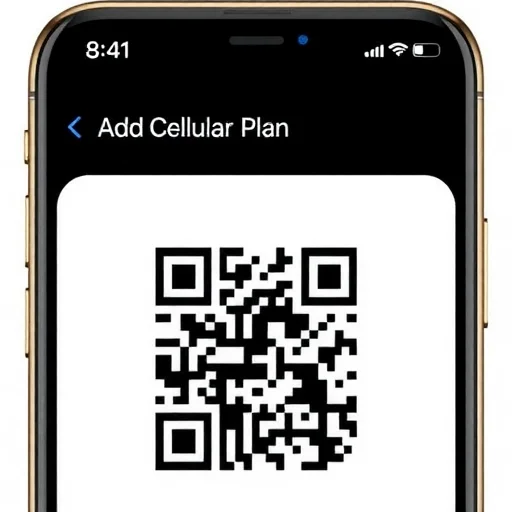
Installation for all digital SIMs is similar. On iPhone: Settings > Cellular > Add Cellular Plan. On Android: Settings > Connections > SIM Manager > Add eSIM. Scan the QR code you received. The profile downloads. You can label it (e.g., “Japan Data”) and set it as your default for data. When you arrive in Japan, ensure the eSIM is enabled and turn off data roaming on your home SIM to avoid charges.
One important note: if you buy a local Japanese eSIM online, you’ll need to upload a photo of your passport for identity verification. This is required by Japanese law and usually takes a few minutes to a few hours. Global travel eSIMs generally do not require verification.
What about compatibility? Most modern smartphones support eSIM: iPhones from XS/XR onward, Google Pixels 3 and newer, Samsung Galaxy S20 and newer, and many others. If your phone doesn’t support eSIM, you can still use a physical SIM card—but for Japan, eSIM is far more convenient.
Ultimately, a digital SIM card is the best way to stay connected in Japan. Whether you choose a global travel eSIM for short trips or a local Japanese eSIM for longer stays, you’ll have reliable data from the moment you land. With coverage from top networks like Docomo, you can navigate, translate, and share your journey with ease. For Japan, a digital SIM card (eSIM) is the most convenient way to stay connected. Choose a global travel eSIM (Ubigi, Airalo) for short trips and data‑only needs; Ubigi offers excellent Docomo coverage. Choose a local Japanese eSIM (IIJmio, NTT Docomo) for longer stays or when a local phone number is required. Install before travel via QR code.
DigitalSIMJapanFINISHED

Used Ubigi for 2 weeks in Japan—Tokyo, Kyoto, Hakone, and Osaka. Flawless coverage everywhere, even on Mount Fuji. 10GB was plenty. Highly recommend for the Docomo network.
I got an IIJmio eSIM with voice for a month in Japan. 20GB and a local number for $25. Perfect for restaurant reservations and using ride‑hailing apps. Great value for longer stays.
I used Holafly’s unlimited plan for a week in Tokyo. Streamed music, video calls, never worried about data. Pricey but worth it for heavy users. Great coverage on SoftBank network.
eSIM is so convenient. No need to find a SIM card at the airport. I installed Airalo before I left and had data immediately. Never going back to physical SIMs.
Important tip: If you’re buying a local Japanese eSIM online, do it a few days before your trip. Passport verification can take a few hours. I did it at home and it was ready when I landed.