
Traveling Abroad? Here’s How a Digital SIM Card Can Simplify Your Trip
If you’re planning an international trip, staying connected is likely one of your top priorities. You’ll want reliable data for maps, ride‑hailing apps, translation tools, and staying in touch with family. The traditional options—expensive roaming plans from your home carrier or hunting for a physical SIM card at the airport—can be frustrating and costly. A digital SIM card (eSIM) offers a better way: you buy a plan online, install it before you travel, and have data the moment you land. This guide explains what a digital SIM is, how it works for international travel, and how to choose the best one for your trip.
A digital SIM card, or eSIM (embedded SIM), is a software‑based version of a traditional physical SIM. Instead of inserting a plastic card into your phone, you download a digital profile from a carrier or eSIM provider. That profile gives you a cellular plan—usually data, and sometimes voice and SMS—without ever handling a physical SIM. For international travel, this is a game‑changer. You can buy a plan for your destination before you leave home, install it on your phone, and have it activate automatically when you land. No more waiting in line at airport kiosks, no more fumbling with SIM ejector tools, and no more expensive roaming charges.
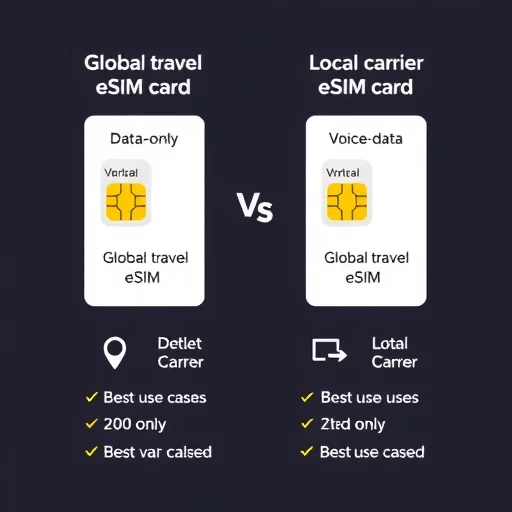
So how does a digital SIM card work for international travel? There are two main types: global travel eSIMs and local carrier eSIMs.
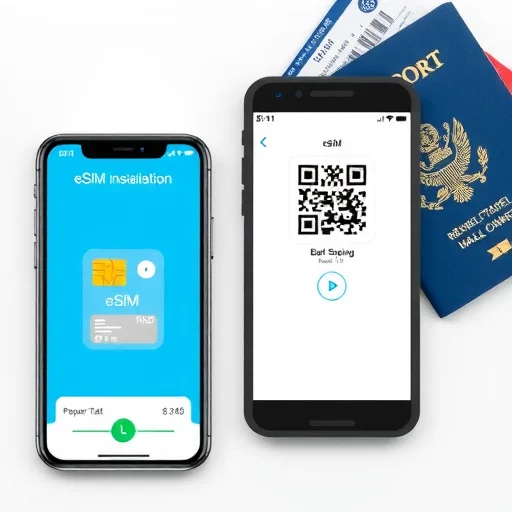
**Global travel eSIMs** are offered by providers like Airalo, Nomad, Holafly, and Ubigi. These companies specialize in eSIMs for travelers. They offer plans for hundreds of countries and regions. You visit their website or download their app, select your destination (or a regional plan like “Europe” or “Asia”), choose a data allowance (3GB, 5GB, 10GB, etc.), and pay. You’ll receive a QR code immediately. You scan this QR code in your phone’s cellular settings, and the eSIM installs. It remains dormant until you arrive at your destination, where it automatically connects to a local network. These plans are typically data‑only, meaning you can use WhatsApp, FaceTime, and other internet‑based apps, but you won’t have a local phone number for traditional calls or SMS.
**Local carrier eSIMs** are offered directly by mobile operators in your destination country. For example, in Japan you can buy an eSIM from NTT Docomo or IIJmio; in the US, from T‑Mobile or Verizon; in France, from Orange. These are full‑service eSIMs that give you a local phone number, voice, SMS, and data. They are often better value for longer stays (two weeks or more) or if you need a local number for reservations, ride‑hailing apps that require SMS verification, or business calls. Some can be purchased online before you travel; others require a visit to a carrier store upon arrival.
Which should you choose? It depends on your travel style.
If you’re taking a short trip (3 to 10 days) and only need data for maps, messaging, and social media, a global travel eSIM is the simplest choice. You can buy it before you leave, install it at home, and have data the moment you land. No passport registration, no store visit. For a 7‑day trip, a 5GB or 10GB plan usually costs between $10 and $25, depending on the destination. Providers like Airalo and Nomad have user‑friendly apps and reliable service across most countries.
If you’re staying longer (two weeks or more), or if you need a local phone number for calls or SMS verification, a local carrier eSIM often provides better value. For example, in Japan, a 20GB plan from IIJmio with a local number costs around $20 for 30 days. In the US, a T‑Mobile prepaid eSIM with 15GB and unlimited talk/text costs about $40 for a month. These plans can be purchased online (with passport verification) or at airport kiosks. The extra step is worth it for the cost savings and the local number.
For multi‑country travel, a regional global eSIM is your best bet. If you’re visiting multiple European countries, a Europe regional eSIM from Airalo or Nomad covers all EU nations with one plan. Similarly, Asia regional plans cover countries like Japan, South Korea, Thailand, and Singapore. Regional plans are often cheaper than buying separate eSIMs for each country and save you the hassle of installing multiple profiles.
Let’s walk through a few real‑world examples.
A friend of mine traveled to Thailand for 10 days. She only needed data for maps, WhatsApp, and Instagram. She bought a 10GB Airalo Thailand eSIM for $18. She installed it at home, and it activated automatically when she landed in Bangkok. She had data immediately, used it for ride‑hailing apps and
Another friend spent a month in Mexico for work. He needed a local number for business calls and to use local apps. He bought a Telcel prepaid eSIM online before his trip. For about $30, he got 20GB of data, unlimited local calls, and a Mexican number. He installed it at home, and it activated when he arrived. He used it for calls, data, and even tethering. The local number was essential for his work.
A third friend took a three‑week backpacking trip across Italy, France, and Spain. She used a Europe regional eSIM from Nomad—10GB for $25. It worked seamlessly across all three countries. She didn’t need a local number, so the data‑only plan was perfect.
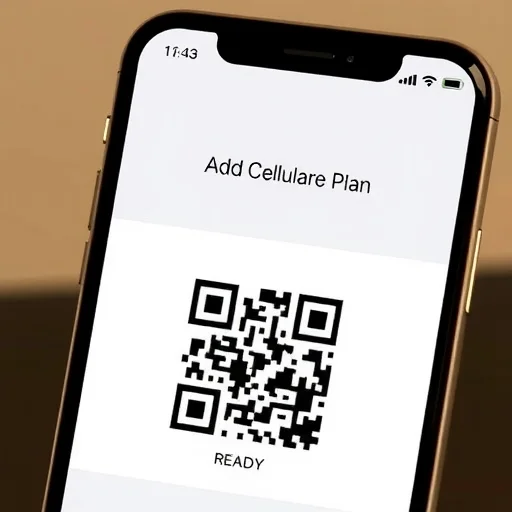
Now, let’s talk about installation. Installing a digital SIM card is simple. On iPhone: Settings > Cellular > Add Cellular Plan. On Android: Settings > Connections > SIM Manager > Add eSIM. Then scan the QR code you received. The profile downloads. You can label it (e.g., “Thailand Data”) and choose whether to use it for data, calls, or both. When you arrive at your destination, ensure the eSIM is enabled and set as your default for data. Turn off data roaming on your home SIM to avoid accidental charges.
What about compatibility? Most modern smartphones support eSIM: iPhones from XS/XR onward, Google Pixels 3 and newer, Samsung Galaxy S20 and newer, and many others. If your phone doesn’t support eSIM, you can still use a physical SIM card—but for international travel, eSIM is far more convenient.
One important tip: buy your eSIM before you travel. Install it at home, where you have a stable Wi‑Fi connection. This ensures you’re not scrambling to download a plan with spotty airport Wi‑Fi. Also, keep a screenshot of the QR code or the confirmation email in case you need to reinstall.
Ultimately, a digital SIM card is the most convenient way to stay connected while traveling internationally. It eliminates the need for physical SIM cards, offers flexibility to switch between plans, and saves you from expensive roaming charges. Whether you choose a global travel eSIM for short trips or a local carrier eSIM for longer stays, you’ll land with data ready and one less thing to worry about. A digital SIM card (eSIM) is the best way to stay connected during international travel. Purchase online before departure, install via QR code, and activate upon arrival. Choose global travel eSIMs (Airalo, Nomad) for short trips and data‑only needs; choose local carrier eSIMs for longer stays or when a local phone number is required. Works on most modern smartphones.
InternationalTravelTipsFINISHED

Important tip: Buy your eSIM before you leave home. I waited until I landed once and struggled with airport Wi‑Fi. Now I always install at home. So much easier.
eSIM security is a plus. No physical card to lose or get stolen. And I can manage everything from my phone. No more SIM ejector tools.
I’ve used Airalo eSIMs for trips to Japan, Thailand, and Italy. Each time, it worked perfectly. Installed before I left, data worked immediately upon landing. Highly recommend for any traveler.
For long stays, local carrier eSIMs are the best value. I used Telcel in Mexico for a month—20GB plus a local number for $30. Couldn’t beat that. And I kept my home SIM for calls with roaming off.
I love that I can store multiple eSIMs on my phone. I have a Europe regional plan, a US plan, and my home carrier all on one device. Switching takes seconds. Perfect for frequent travelers.