
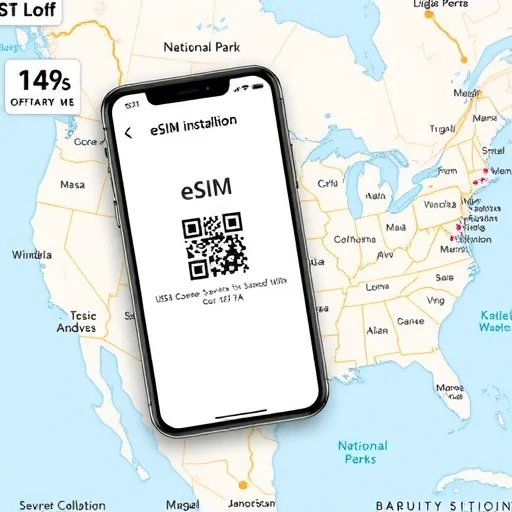
Planning a US Trip? Here’s How to Choose the Best eSIM Plan for Your Needs
If you’re visiting the United States, staying connected is probably high on your list. You’ll want reliable data for navigating unfamiliar cities, using ride‑hailing apps like Uber and Lyft, and staying in touch with friends and family. The best solution for most travelers is an eSIM: a digital SIM you can install before you depart. But with the US having a complex mobile market—three major carriers, varying coverage between cities and rural areas, and a mix of global eSIM providers and local carrier plans—how do you pick the best eSIM plan? This guide walks you through the options so you can stay connected without overpaying or ending up with spotty service.
The United States has three main mobile network operators: T‑Mobile, AT&T, and Verizon. Each has distinct strengths. Verizon has the most extensive coverage overall, particularly in rural areas and along interstate highways—essential if you’re road‑tripping through national parks or driving across states. T‑Mobile offers excellent urban coverage and fast 5G in major cities, and it’s often the most affordable option. AT&T sits in the middle, with solid coverage across both cities and rural regions. When you buy an eSIM plan, you’re effectively choosing which of these networks you’ll be using. For travelers sticking to cities like New York, Los Angeles, or Chicago, T‑Mobile is usually sufficient. For those venturing into national parks, the Southwest, or rural America, Verizon or AT&T are better bets.

eSIM plans for the US fall into three main categories. The first is global eSIM providers like Airalo, Nomad, Holafly, and Saily. These are designed specifically for travelers. You buy and install them before you leave home, and they activate the moment you land. Most of these plans are data‑only and typically operate on T‑Mobile’s network, though some offer AT&T as an option. They’re ideal for short trips (3 to 14 days) and offer fixed‑total data packages—3GB, 5GB, 10GB, etc.—at competitive prices. For a one‑week trip, a 5GB or 10GB plan usually costs between $15 and $30. Convenience is their biggest strength.
The second category is local US prepaid eSIMs from the carriers themselves. T‑Mobile, AT&T, and Verizon all offer prepaid eSIM plans that you can purchase online or at their stores after arrival. These plans often come with larger data allowances, include a local US phone number, and offer unlimited talk and text. They’re a better value for longer stays (two weeks or more) or if you need voice calling and SMS verification—useful for things like rental car reservations or restaurant bookings that require a local number. However, they require a bit more setup: you’ll need to provide ID, and some plans auto‑renew monthly, so you’ll need to cancel before you leave if you don’t want to be charged again.
The third category is travel‑focused US eSIM providers that partner with US carriers but offer plans tailored to tourists. Services like Keepgo, Ubigi, and others fall into this category. They offer a middle ground: easier setup than local carrier plans, with better per‑GB rates than global providers for medium‑length trips. They’re worth considering if you’re staying for two to three weeks and want a local number or more data than global providers offer at a reasonable price.
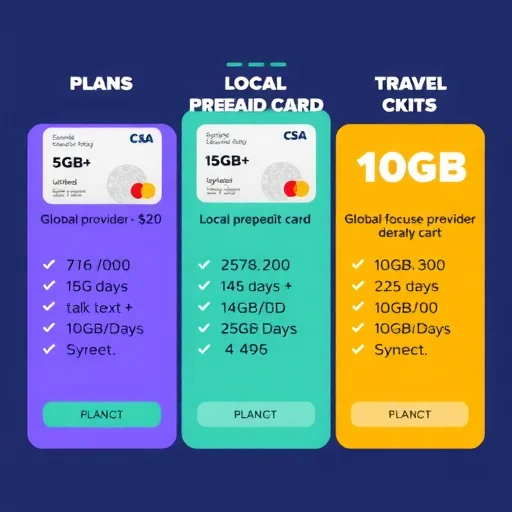
So which one should you choose? Let’s match plans to travel styles.
If you’re taking a short city trip—say, 5 to 7 days in New York, San Francisco, or Chicago—a global eSIM provider is your best bet. You can install it before departure, and you’ll have data as soon as you land. A 5GB plan is typically enough for a week if you use maps, ride‑hailing, messaging, and occasional social media. If you’re a heavier user, 10GB gives you comfortable breathing room. Providers like Airalo and Nomad have user‑friendly apps, and you can top up easily if you need more data.
If you’re on a longer trip—two weeks or more—or if you’re road‑tripping through multiple states and national parks, a local prepaid eSIM from Verizon or AT&T becomes a stronger choice. Verizon’s prepaid plans, for example, offer 15GB or 25GB of data plus unlimited talk and text for around $40 to $60 per month. The ability to make phone calls (not just WhatsApp calls) is valuable for contacting hotels, tour operators, or roadside assistance. And the rural coverage advantage of Verizon or AT&T is significant if you’re driving through places like Utah’s national parks or the Montana wilderness. T‑Mobile’s prepaid options are also solid and often cheaper, but their rural coverage is less reliable.
If you’re a digital nomad or staying for a month or longer, the value equation shifts further toward local carrier eSIMs. Buying a plan directly from a carrier often gives you the best per‑month rate, especially if you need substantial data for work. Many of these plans can be set up online or at a carrier store upon arrival, and you can cancel before you leave. Just be mindful of auto‑renewal.
Now, let’s talk about a critical detail: network coverage. If your trip is entirely urban, T‑Mobile is perfectly fine. But if you’re visiting national parks like Yellowstone, Zion, or the Grand Canyon, Verizon has a clear edge. In my experience, I’ve had Verizon signal in remote parts of Utah where T‑Mobile and AT&T had none. If coverage is critical for your trip—especially if you’re relying on GPS for navigation—it’s worth spending a few extra dollars for a plan that uses Verizon. Some global eSIM providers now offer Verizon‑based plans; if not, a local Verizon prepaid eSIM is the way to go.
Another practical factor: many global eSIM plans are data‑only. That means you can use WhatsApp, FaceTime, and Skype, but you won’t have a traditional US phone number. If you need to make old‑fashioned phone calls—say, to a rental car company that doesn’t use WhatsApp, or to call a restaurant for a reservation—you’ll want a plan with voice. Local prepaid eSIMs from T‑Mobile, AT&T, and Verizon all include a local number. Some global providers now offer “with voice” options in the US, but they’re less common.
I recently helped a friend plan a three‑week US road trip that started in Los Angeles, went through the Grand Canyon, Zion, Bryce Canyon, and ended in Las Vegas. We opted for a local Verizon prepaid eSIM. She bought it online before departure, installed it on arrival, and had 15GB of data plus a local number for about $45. Throughout the trip, she had coverage in places where other travelers on T‑Mobile‑based eSIMs had none. The ability to call hotels directly from the road made last‑minute changes easy. She told me later that the small premium for Verizon coverage was absolutely worth it.
If you’re traveling to multiple countries including the US—say, a trip that combines Canada, the US, and Mexico—look for a North America regional eSIM. Several global providers offer these, and they can be more cost‑effective than buying separate plans for each country. Just check which networks they use in the US; ideally, they should offer a choice of Verizon or AT&T for rural coverage.
Finally, always double‑check that your phone is unlocked and eSIM‑compatible before buying a plan. Most modern smartphones support eSIM, but carrier‑locked phones—especially those purchased from US carriers—may not accept eSIMs from other providers. A quick check with your home carrier or phone settings can save you from an unpleasant surprise.
Choosing the best eSIM plan for the US comes down to matching your trip length, coverage needs, and voice requirements. For short city trips, global eSIM providers offer unbeatable convenience. For longer trips or rural exploration, local prepaid eSIMs from Verizon or AT&T provide better coverage and value. And for those in between, travel‑focused US eSIM providers offer a solid middle ground. A few minutes of planning before you go means you can land, connect instantly, and focus on enjoying your trip. For US travel, choose an eSIM based on trip length and coverage needs: global providers (Airalo, Nomad) offer convenience for short city trips; local prepaid eSIMs (Verizon, AT&T) provide better coverage for rural areas and longer stays, and include a local number for calls.
Just did a 10-day trip to NYC and DC. Used a 10GB Airalo plan. Worked perfectly—fast 5G in cities, easy setup before I left. Highly recommend for short city trips.
Important tip: Make sure your phone is unlocked! My phone from home was carrier-locked and couldn’t use any US eSIM. Had to buy a cheap phone locally. Check before you go.
I needed a US number for business calls during a 3-week trip. Got the T‑Mobile tourist eSIM at LAX. Unlimited talk/text and 15GB data for around $40. Great value and setup was easy.
Used a Nomad eSIM for a week in Chicago. 5GB was plenty for maps, Uber, and social media. The app made it super easy to top up when I needed more. Solid option for city travelers.
Road-tripped through Utah and Arizona for two weeks. Used a local Verizon prepaid eSIM. Had coverage in Zion and the Grand Canyon when friends on T‑Mobile had nothing. Worth every penny if you’re heading to national parks.