
Which Phones Support eSIM? Here’s Everything You Need to Know Before Buying
If you’ve been hearing about eSIMs—the digital SIM cards that let you switch carriers without physically swapping a tiny piece of plastic—you might be wondering whether your current phone supports it, or which phone to buy if you want this feature. The good news is that eSIM support has become increasingly common across both flagship and mid‑range devices. But it’s not universal, and there are important nuances between brands, regions, and even carrier‑locked versions. This guide will walk you through exactly which phones support eSIM, what to look for, and how to make sure you’re getting a device that actually works with the eSIM features you need.
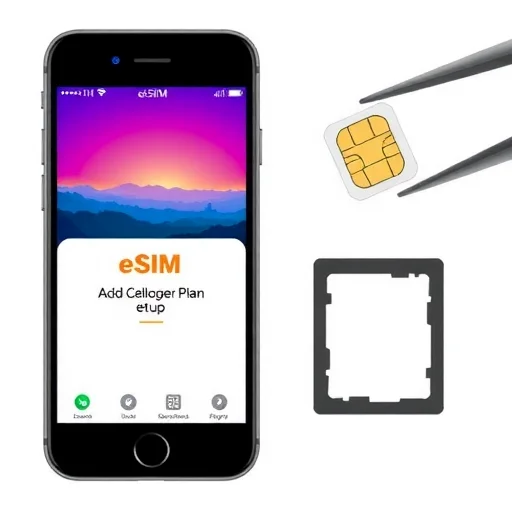
First, let’s quickly cover why eSIM matters. An eSIM (embedded SIM) is built directly into your phone’s hardware. Instead of inserting a physical SIM card, you activate a mobile plan by scanning a QR code or using your carrier’s app. This is incredibly useful for travelers who want to add a local data plan without hunting for a SIM card at the airport, for dual‑SIM users who want to keep their personal number separate from a work or travel line, and for anyone who wants to switch carriers without visiting a store. But none of this works if your phone doesn’t have eSIM capability.

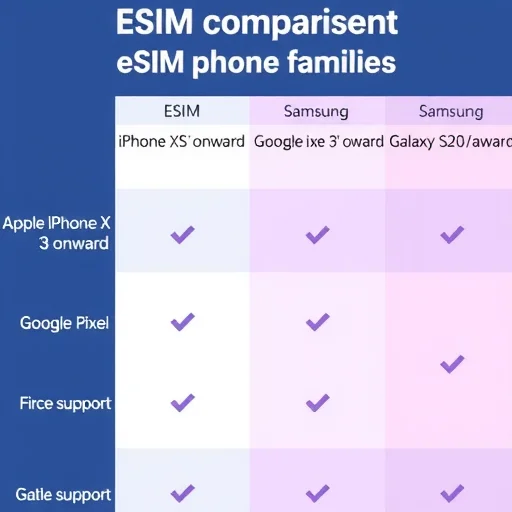
So which phones actually support eSIM? Let’s start with Apple. Apple was one of the early adopters of eSIM technology. All iPhone models from the iPhone XS, iPhone XS Max, and iPhone XR onward support eSIM. That includes the entire iPhone 11, 12, 13, 14, 15, and 16 series. However, there’s an important distinction: in the United States, iPhone 14 and later models sold there no longer have a physical SIM tray at all—they are eSIM‑only. In other regions, these models still include a physical SIM slot alongside eSIM support. If you’re buying an iPhone specifically for eSIM functionality, any model from the XS generation or newer will work, but be aware of regional variations.
For Google Pixel devices, eSIM support started with the Pixel 2 (released in 2017), but only for certain carriers. For full, unrestricted eSIM functionality, the Pixel 3 and newer models are your safest bet. The Pixel 3a, Pixel 4, Pixel 4a, Pixel 5, Pixel 6 series, Pixel 7 series, Pixel 8 series, and Pixel 9 series all support eSIM. Like Apple, Google has embraced eSIM across its product line, making Pixels a reliable choice for users who want flexibility.
Samsung’s eSIM story is a bit more complicated. Most recent flagship Samsung phones support eSIM, but the rollout was gradual. The Galaxy S20 series (S20, S20+, S20 Ultra) and newer—including S21, S22, S23, S24, and S25 series—generally support eSIM. The Galaxy Note 20 series also supports it, as do the Z Fold and Z Flip series from the Z Fold2 and Z Flip 5G onward. However, some earlier models like the S10 series do not have eSIM support. Additionally, carrier‑locked versions of Samsung phones in some regions may have eSIM disabled. If you’re buying a Samsung phone specifically for eSIM, it’s worth checking the exact model number and confirming with the seller.
Beyond Apple, Google, and Samsung, eSIM support is expanding across other manufacturers. Many newer Motorola phones—such as the Moto G54, G84, and the Razr series—include eSIM support. Sony’s Xperia 1 V, 5 V, and newer models support eSIM. Huawei’s P40, P50, and Mate 40 series (and newer) also offer eSIM in some regions. Oppo, Xiaomi, and OnePlus have been slower to adopt eSIM, but recent flagships like the Oppo Find X5, X6, and X7 series, Xiaomi 13 and 14 series, and OnePlus 12 and 13 now include eSIM support in many markets. If you’re looking at a device from a Chinese manufacturer, double‑check regional availability—eSIM is often enabled in global versions but may be absent in models sold within China.
Now, here’s a critical detail that catches many buyers off guard: regional and carrier variations. A phone model that supports eSIM in Europe may not support it in the United States if it’s carrier‑locked. For example, Samsung phones sold by some U.S. carriers had eSIM disabled via firmware until relatively recently. Even iPhones, which universally have eSIM hardware, can have the feature restricted by carrier lock status. If you’re buying a used or carrier‑locked phone, always verify that eSIM is both hardware‑supported and enabled on the software side. The safest approach is to buy an unlocked phone directly from the manufacturer or a reputable retailer that explicitly lists eSIM capability.
Another consideration is dual‑SIM functionality. Most eSIM‑capable phones allow you to use one physical SIM and one eSIM simultaneously, or two eSIMs on newer models (like the iPhone 13 and later). This is a huge advantage for frequent travelers who want to keep their home number active while adding a local data plan. If you rely on dual SIMs, check whether the phone supports dual active SIMs or if it switches between them. Most modern flagships handle this seamlessly.
If you’re in the market for a new phone and eSIM is a priority, here’s a simple checklist. First, decide between iOS and Android. For the most seamless eSIM experience, iPhones are hard to beat—Apple has standardized eSIM across its lineup and the setup process is extremely straightforward. For Android, Google’s Pixel series offers a similarly clean experience, followed closely by Samsung’s flagship S and Z series. Second, buy unlocked. An unlocked phone ensures you’re not at the mercy of a carrier’s firmware restrictions. Third, confirm the specific model number if you’re buying second‑hand. Websites like GSMArena list eSIM support for most devices, and a quick search for “model number + eSIM support” can save you from disappointment.
I recently helped a friend upgrade her phone specifically because she travels frequently and wanted the convenience of eSIM. She was torn between an iPhone and a Samsung. After we looked at her usage—she relies heavily on WhatsApp and navigation apps, and she wanted a dual‑SIM setup—she went with an unlocked iPhone 15. The eSIM setup for her trips to Japan and Thailand took less than two minutes each time, and she never had to hunt for a physical SIM card again. She told me later that the convenience alone made the upgrade worth it.
If your current phone doesn’t support eSIM, don’t worry—you can still use a physical SIM or a portable Wi‑Fi device. But if you’re in the market for a new phone or planning to travel frequently, eSIM capability is a feature that adds genuine flexibility. The good news is that most modern flagships and many mid‑range phones now include it. By understanding which models support it and how to verify regional availability, you can make a confident choice. eSIM support is now standard on most flagship phones from Apple (iPhone XS and newer), Google (Pixel 3 and newer), and Samsung (Galaxy S20 and newer). Regional and carrier variations exist, so buy unlocked and verify model‑specific support. Dual‑SIM functionality makes eSIM ideal for travelers.
I travel for work and eSIM is a game-changer. My iPhone 13 handles dual SIM perfectly—home carrier on physical SIM, local data on eSIM. Setup takes 2 minutes at the airport. Would never go back to hunting for local SIM cards.
Google Pixel 7 user here. The eSIM setup is super easy, and I love that I can have my work and personal numbers on one phone without two physical SIMs. Highly recommend Pixels for eSIM.
Heads-up for Samsung users: I bought an S21 from a carrier and eSIM was disabled. Switched to an unlocked S23 and it works perfectly. If you’re on Samsung, buy unlocked or confirm with your carrier that eSIM is supported.
The iPhone 14 and newer in the US are eSIM-only. Honestly, I was nervous at first, but it’s been fine. Switching carriers is so easy now. Just make sure you’re comfortable with the setup before you travel.
Important note: Not all regions have eSIM support even if the hardware does. I bought a Xiaomi 13 in China and it had no eSIM. Check before you buy if you’re in Asia!